Tanzania steps up to ensure water for all
TANZANIA: AS Tanzania marks 64 years since independence, the government is intensifying efforts to ensure that universal access to clean, safe water becomes a reality for all citizens.
The Ministry of Water tabled a 1.016 tri/- budget for the 2025/26 financial year, pledging to complete over 1,500 water projects across the country, from rural boreholes to major urban pipelines.
The initiative represents a bold step toward expanding access, improving sanitation and securing water supply for millions more Tanzanians.
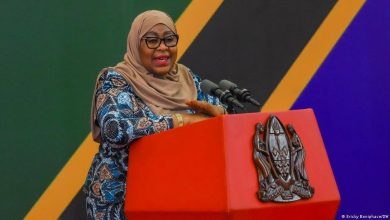
During President Samia Suluhu Hassan’s recent campaign in Sumbawanga, Rukwa Region, she reiterated her commitment to water access, saying, “every Tanzanian deserves clean and safe water. This grid will ensure that no community is left behind.”
That pledge anchors the government’s plan to establish a nationwide water supply network, a foundation for sustained access.
The 1.016 tri/- plan is a comprehensive financing package targeting both development and recurrent expenditure.
Around 943.12 bn/- is earmarked for development programmes, including construction and rehabilitation of water infrastructure, expansion of networks and new installations in underserved areas.
The remaining 73.78 bn/- will cover recurrent costs such as staff salaries and operational expenses. Under this plan, roughly 1,544 water projects are scheduled for completion during 2025/26, including 1,318 rural and 226 urban projects.
The programme specifically targets villages and communities that have long been excluded from a reliable water supply.
Through a combination of drilling boreholes, rehabilitating existing water points, expanding piped water networks, building and rehabilitating dams and upgrading treatment facilities, the government aims to bring sustainable water access to previously neglected areas.
Beyond mere construction, the plan includes strengthening maintenance, monitoring water quality and ensuring that the water supply remains safe and sustainable over the long term.
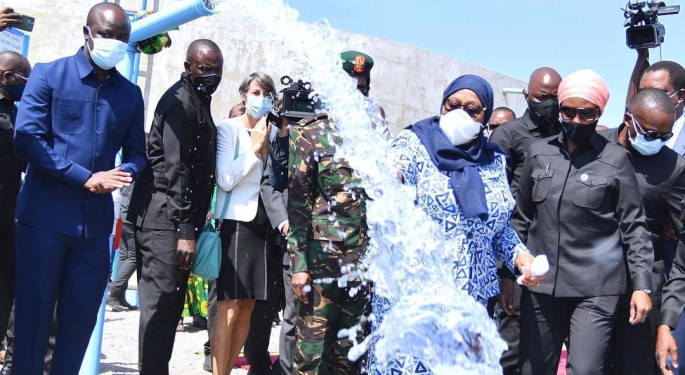
In March 2025, when President Samia officially launched the Same-Mwanga-Korogwe Water Project aimed at supplying 51.6 million litres per day to tens of thousands of residents, President Samia told the public that the project would deliver “the essential commodity to thousands of residents,” underscoring the impact of water supply on livelihoods and wellbeing.
Improved water infrastructure promises significant benefits for both rural and urban populations.
For communities in remote areas, new wells and rehabilitated water points will reduce dependence on unsafe sources such as rivers or unprotected wells, which are often linked to waterborne diseases.
Reliable water access also supports sanitation and hygiene practices, reducing the prevalence of illnesses like diarrhoea, which disproportionately affect young children.
Studies in rural Tanzania have shown that households with functional water supply systems experience measurable reductions in disease incidence, benefiting overall public health and well-being.
Moreover, access to water closer to homes supports livelihoods, allowing communities to engage in small-scale farming, livestock keeping and other income-generating activities.
The stability of water supply reduces the time and energy spent on collection, enabling more people, especially women and children, to attend school, participate in productive work, or take part in community life. For women and girls, water access is particularly transformative.
Across rural and disadvantaged urban areas, they are often responsible for collecting water, sometimes walking long distances with heavy loads.
By providing closer, reliable water points, the government can reduce the daily burden on women and girls, giving them time for education, income-generating work, childcare, or rest.
Reliable water also improves menstrual hygiene management and overall health for women and girls, while reducing the risk of waterborne diseases for entire households.
During a campaign stop in Kondoa in August 2025, President Samia pledged that water shortages in the district would end completely over the next five years.
“Water shortage here will end completely,” she declared, a clear commitment to achieving full water coverage in historically underserved areas.
ALSO READ: TZ unveils national water grid plan at COP30
The plan encourages gender-sensitive water planning and promotes the involvement of women in water management and decision-making, helping to ensure that interventions meet the actual needs of communities and contribute to sustainable change.
The government’s ambitious investment is not without challenges. Maintaining water infrastructure over time has been a persistent issue in Tanzania, with past projects falling into disrepair due to limited maintenance, poor community engagement, or inadequate funding for operations.
Equitable distribution of water remains a concern, especially in remote areas with difficult terrain, requiring careful prioritisation to ensure underserved communities are reached.
Water quality and safety must be continuously monitored to prevent contamination, particularly in areas where water tables are shallow or prone to pollution.
Community participation and gender-responsive governance are essential to sustaining improvements, ensuring fair access and avoiding overburdening women and vulnerable groups.
The 2025/26 water budget also highlights the reliance on external financing, which constitutes roughly 63.9 per cent of the development funds.
While this support accelerates implementation, it also requires timely disbursement and strong coordination with development partners.
Population growth and urban expansion will continue to increase demand, making it imperative that investments go hand in hand with effective management, monitoring and long-term planning.
As Tanzania celebrates 64 years of independence, the 1.016 tri/- water plan signals a renewed commitment to national development and social equity.
Water, often overlooked as a basic utility, remains fundamental to health, education, livelihoods and dignity.
By prioritising water access, the government is addressing a core pillar of sustainable development while directly impacting the daily lives of citizens.
For women and girls, in particular, this plan promises relief from the disproportionate burden of water collection and the opportunity to participate more fully in education, economic activities and community life.
Ultimately, the success of this investment will depend on more than infrastructure alone.
It will require strong institutional capacity, community engagement, gender-sensitive governance and long-term maintenance strategies.
If implemented effectively, the plan will mark a turning point in Tanzania’s 64-year journey of independence, transforming access to water from a scarce commodity to a sustainable, life-enhancing resource.
By ensuring that clean, safe water reaches every corner of the country, the government is not just delivering taps and pipelines; it is laying the foundation for healthier, more equitable and prosperous communities, fulfilling a promise that began at the dawn of independence.