Wisdom thrives: Samia’s call for unity, restraint and national healing
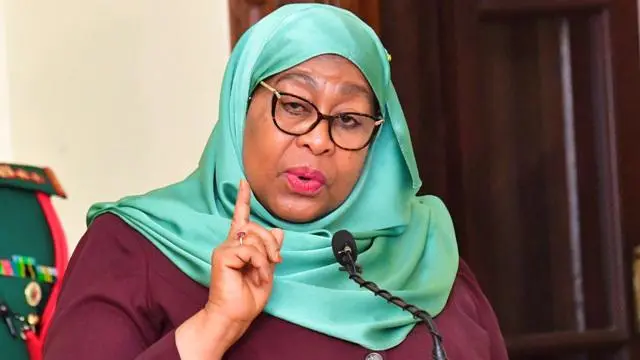
DAR ES SALAAM: IN her 2nd December 2025 address to the Dar es Salaam Council of Elders, President Samia Suluhu Hassan spoke to a nation still grappling with the aftermath of recent unrest.
Her message combined calm firmness with empathy, framing the moment not as one of despair, but as an opportunity for clarity, discipline and national healing.
More than a political address, it was a reminder that leadership, particularly in times of crisis, must remain present, communicative and rooted in dialogue.
The president drew a clear distinction between constitutional demonstrations and deliberate acts of violence.
Referring to the events of 29 October as a “broad plan of evil”, a coordinated attempt with both internal and external support, she emphasised that the unrest was orchestrated to inflict maximum political and emotional damage.
By invoking her oath of office to protect the nation, its people, borders and property, she justified the firm response of state authorities during the crisis.
At the same time, President Samia acknowledged the pain and fear felt across the country.
“When one of us is hurt, we all hurt; when one of us dies, we are all affected,” she said, appealing to the elders’ sense of shared responsibility.
Her words reminded citizens that Tanzania’s identity as a peaceful, welcoming and cohesive society must never be taken for granted.
This marked her fourth public address since the unrest, underscoring her commitment to transparency and to remaining a steady presence for citizens.
Dar es Salaam, she pointed out, is central not only to the country’s economy but to its national stability.
Home to six million people and generating 17 per cent of Tanzania’s revenue, the city is the commercial and logistical backbone of the nation.
She warned that further attacks on the city would have far-reaching consequences for livelihoods across the country, highlighting the importance of collective restraint in maintaining peace.
Defending the conduct of security agencies, the President stressed that force used during the unrest was proportionate and consistent with constitutional responsibility.
“The force used is proportionate to the incident,” she stated firmly, emphasising that the state’s duty is to preserve order when faced with coordinated attempts to destabilise the nation. Religious institutions were also addressed.
The President urged leaders to remain within their spiritual mandate, warning against politicising faith: “All religions, stay within your line, every authority is given by God.”
She stressed that when spiritual authority is politicised, it risks dividing communities whose unity has long anchored Tanzania’s stability.
On constitutional reform, President Samia reiterated that the government has never rejected progress.
ALSO READ: Dr Samia condemns selfish political motives that engineered the unrest
She noted that 90 per cent of reconciliation recommendations have been implemented, those who withdrew are welcome to participate again, and the three-month investigation into the 29 October unrest will continue.
Reforms, she insisted, must follow a responsible and sequential process.
“We will stand up and defend the country by all means,” she asserted, rejecting any notion that reforms can be dictated by threats or external pressure.
A particularly significant part of her address was her warning against ethnic, religious or regional polarisation.
She noted that attempts to divide Tanzanians along these lines are deliberate strategies imported from outside and must be decisively rejected.
In the same vein, she cautioned against adopting foreign political models or violent protest cultures not rooted in Tanzanian history.
Her appeal was for citizens to resist imitation of unrest from other nations and to remain focused on local solutions.
President Samia also highlighted the role of misinformation and digital manipulation in escalating unrest.
Coordinated online campaigns, including from the diaspora, were cited as tools used to inflame anger without bearing the real consequences on the ground.
She framed this as a modern challenge: destabilisation is digital first, physical second, making careful and responsible information sharing essential.
The President spoke of fear as a weapon used against national development. Fear, she said, disrupts business, undermines confidence and manipulates citizens.
She underscored that Tanzania’s natural resources must unite, not divide, and that foreign powers should not dictate local politics.
“Build the nation, citizens,” she reminded Tanzanians, reiterating that the responsibility for national stability and development rests first with the country’s own people.
Citizens were called on to exercise restraint in speech and online behaviour, avoiding unverified information, forwarding incitements or reacting impulsively to rumours.
She also issued a subtle warning to leaders who claim patriotism while promoting fear, reminding the nation that moral responsibility accompanies authority.
Through it all, President Samia presented herself as a leader connected to the people.
Framing herself in relational terms, as mother, sister and student, she emphasised leadership as service, not force.
Her message to young people was particularly pointed: “Our wounds will be healed by ourselves, not by outsiders.”
The youth were urged to resist manipulation, safeguard peace and truth, and act as custodians of Tanzania’s future.
Finally, addressing concerns about renewed unrest, she reassured citizens: “Whenever they come, we are prepared.”
This was not a threat but a statement of preparedness, reflecting confidence in state institutions while calming public anxiety. President Samia’s address was a call to national maturity.
It highlighted the fragility of peace, the intentionality required for unity, the power of information, and the enduring importance of dialogue.
In a moment of vulnerability, she urged Tanzanians to respond with clarity over anger, collective wisdom over division, and steady resolve over haste.
Her message was simple yet profound: Tanzania will heal, but only if its citizens actively protect the peace that has carried the nation this far.