Lighting up the nation, advancing Tanzania’s clean energy vision
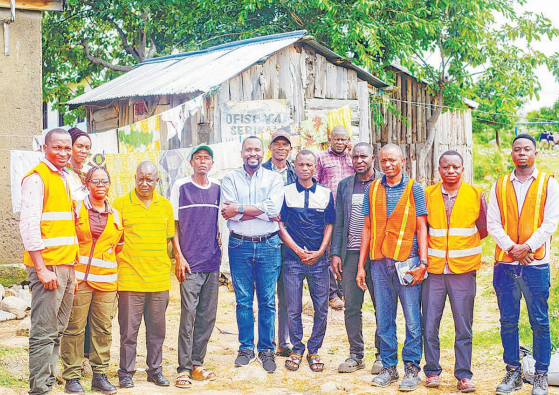
MWANZA: TANZANIA’S journey toward universal access to clean, affordable and reliable energy has taken a major leap forward, with a new strategic partnership poised to transform some of the nation’s most underserved island communities.
While national debates often focus on grid expansion in mainland regions, a quiet but powerful revolution is unfolding across the waters of Lake Victoria, one that aligns directly with the country’s broader agenda for economic growth, environmental protection and inclusive development.
At the centre of this shift is PowerHut Renewables Limited, an Arusha-based renewable energy company that has entered a one-year strategic partnership with three major US-affiliated institutions, Assist International, Caterpillar Inc and Mantrac Tanzania.
The collaboration, formalised in early December 2025, aims to expand access to electricity and clean cooking solutions in four Lake Victoria islands, Juma, Kasalazi, Ziragula and Bezi.
Although these islands are small in population, their electrification represents a significant national milestone they serve as living laboratories for how inclusive, off-grid renewable energy can advance Tanzania’s economic competitiveness and environmental commitments while uplifting communities that have historically been left behind.
Universal access to electricity and clean cooking is at the heart of Tanzania’s development blueprint, including the National FiveYear Development Plan and the National Clean Cooking Strategy.
Remote and island communities, however, have traditionally struggled to participate fully in these national priorities due to geographic isolation, limited infrastructure and expensive logistics.
It is within this context that the PowerHut partnership emerges, not as a localised project but as part of the national agenda to prove that renewable mini-grids can unlock economic and social transformation far beyond the reach of traditional grid infrastructure.
“The aspirations of the people for improved electricity services are now being addressed,” says Dr Prosper Magali, Chief Executive Officer of PowerHut Renewables Limited.
His words reflect a sense of relief and anticipation shared by many residents who have lived for decades without the basic energy services that many Tanzanians on the mainland take for granted.
The partnership draws together complementary strengths.
Caterpillar Inc, through its Caterpillar Electrification Initiative, contributes advanced technologies designed for rugged, off-grid environments.
Assist International offers oversight and management of humanitarian energy initiatives across Africa.
Mantrac Tanzania supplies technical capacity and regional expertise, while PowerHut, with years of on-the-ground experience, will handle daily operations and infrastructure management.
According to Cheri Reynolds, Vice-President of Programmes and Strategy at Assist International, the transformative potential of the project lies not only in technology but in the everyday human needs it supports.
“Reliable electricity creates new possibilities for families and communities; it allows children to study after dark, health facilities to reliably serve patients and small businesses to expand and grow,” she says.
She notes that Assist International has a long history of working in Tanzania and has seen firsthand how partnerships create sustainable change.
“We are excited to join this collaboration to bring resilient energy that supports education, healthcare and economic growth,” she adds.
For Caterpillar Inc., the initiative is more than corporate philanthropy, it is an investment in human progress.
“Access to reliable electricity in Tanzania is more than just infrastructure; it is about empowering communities, strengthening security and opening up opportunities,” says Mellissa Busen, VicePresident in the Electric Power Division.
Mantrac Tanzania echoes this commitment. Amr Zaki, the company’s East Africa Business Operations Manager, describes the project as a “privilege” that strengthens local resilience and contributes to long-term social transformation.
For the island residents of Lake Victoria, the new partnership promises to unlock economic potential that has long remained dormant. Although PowerHut has operated minigrids in these islands since 2018, serving more than 2,000 residents across eight islands, growing demand and expanding economic activities have stretched existing systems.
The upgraded infrastructure will benefit a wide spectrum of activities:
• Entrepreneurship: Artisans such as carpenters and welders will now have access to stable electricity, increasing productivity and opening new business opportunities.
• Fishing industry: Fishermen will be able to charge batteries for their boats, preserve fish in electric-powered freezers and access ice for storage, reducing post-harvest losses.
• Household well-being: Families will gain access to clean, electric cooking solutions, eliminating the health hazards of smoke inhalation.
• Healthcare: Dispensaries and small laboratories will receive consistent lighting crucial for nighttime childbirth and emergency care. Refrigeration for medicines and vaccines will also be improved.
Dr Magali emphasises that clean cooking access is not merely a convenience, it’s a matter of public health and gender equity.
“This is liberation from the harm caused to women and others by smoke from longterm use of firewood, along with the long hours and high costs involved in searching for firewood and charcoal instead of engaging in productive activities,” he says.
ALSO READ: Tanzania’s Clean Cooking Energy drive hits 76 percent success
The islands face persistent shortages of firewood and charcoal, forcing residents to buy fuel from the mainland at high prices. By promoting energy-efficient electric cooking, the programme aims to reduce environmental degradation and lower household costs.
Under the partnership agreement, PowerHut will operate and manage the electricity generation infrastructure, while the partner organisations will provide funding, technical support and strategic guidance. The project’s success will rely on close coordination with government ministries, regulatory bodies and development stakeholders.
“We expect strong cooperation from the government, relevant ministries and institutions and other stakeholders to ensure this programme is implemented successfully and benefits the island communities,” says Dr Magali.
This aligns with Tanzania’s broader energy and environmental ambitions, particularly the goal of ensuring widespread access to renewable energy solutions that reduce carbon emissions and protect ecosystems.
The transformation unfolding in the Lake Victoria islands illustrates how energy access is fundamentally tied to national development.
• Education improves when students can study after dark.
• Healthcare expands when facilities have proper lighting and refrigeration.
• Local economies grow when entrepreneurs can power machines and equipment.
• Environmental protection is strengthened when communities transition away from charcoal and firewood.
• These outcomes echo the government’s vision of inclusive, sustainable development and highlight why island electrification is a matter of national interest, not merely local reform.
What makes this partnership especially significant is its potential for replication. The islands serve as an ideal pilot environment for renewable energy solutions that can be scaled across other underserved regions in Tanzania and East Africa.
As PowerHut’s portfolio expands and demand continues to rise, the lessons learned from these islands could shape national policy on off-grid electrification, mini-grid financing and clean cooking adoption.
The need is evident: energy demand has increased every year since 2018, signalling strong market viability and community acceptance.
In a country where access to energy remains uneven across geography and income levels, the PowerHut partnership signals what is possible when global expertise meets local innovation. It is a story of how Tanzania is boldly rewriting its energy future, one island at a time.
As Lake Victoria’s waters shimmer under the setting sun, the glow from newly energised homes, clinics, workshops and fishing boats may soon stand as a powerful symbol of national progress, a reminder that no community is too remote, no household too small and no island too distant to be included in Tanzania’s forward march toward sustainable development.