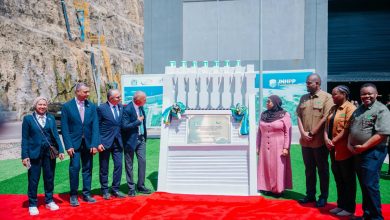
TAZARA revival signals regional transformation

BEIJING: AS the end of the year rapidly approaches, it is timely to pause and reflect much like couples do at the close of a shared chapter and that is on a significant relationship: Its accomplishments, challenges, lessons, growth and areas where improvement is needed. This reflection is particularly relevant when considering the evolving partnership between China and Tanzania.
Over the past year, several important milestones have been achieved in this bilateral relationship, and as we look toward 2026, it is essential to evaluate the critical pillars that underpin it, especially transportation infrastructure and economic cooperation.
Just as in any successful relationship, a mindful perspective is needed, and “relationship goals,” as often emphasised by bilateral diplomats, should reflect a genuine win-win vision.
China, as the world’s second-largest economy, maintains a close and friendly relationship with Tanzania and has contributed significantly to Tanzania’s socio-economic development over the years. This contribution is expected to continue for decades to come. Such expectations are not baseless.
The ruling parties of both nations have cultivated a longterm working relationship, and since taking office, the heads of state of China and Tanzania have met twice, further strengthening these ties.
In addition, several bilateral cooperation agreements have been signed, and if these agreements are properly executed, they promise to usher in new developments in the partnership between the two countries.
Perhaps the most eagerly anticipated development in the coming year is the implementation of the agreement to revitalise the Tanzania-Zambia Railway Authority (TAZARA), following the recent groundbreaking ceremony in Zambia. TAZARA, historically, has been one of the most visible symbols of Sino–Tanzanian relations.
Yet, its current state highlights the urgent need for extensive upgrades. The Dar es Salaam port, which serves sixteen countries in the Southern Africa Development Community (SADC), will benefit significantly from these improvements.
Modernising the railway not only aligns it with contemporary economic realities but also enhances trade and connectivity for the broader Southern African region, offering regional economic benefits that extend far beyond Tanzania’s borders.
Economic diplomacy has been central to Tanzania’s engagement with China. At the Beijing Forum on China-Africa Cooperation held in September 2024, Tanzania’s Minister of Foreign Affairs and East African Cooperation, Mr Mahmoud Thabit Kombo, outlined the nation’s priorities under the ten areas of cooperation proposed by China.
Industrialisation and infrastructure development were highlighted as sectors that could attract Chinese investment. Since then, tangible results have emerged: Investments and contributions to roads, bridges and a section of the Standard Gauge Railway linking Isaka to Mwanza are underway.
Additionally, the Sino–Tan Industrial Park in Coast Region is seeing nearly 300 factories under construction, which are expected to create over 100,000 jobs for Tanzanians. These developments exemplify the transformative potential of focused collaboration between the two countries.
As we move into 2026, another key dimension of Sino– Tanzanian relations is peopleto-people engagement. While high-level governmental and corporate relations between the two nations remain strong, significant challenges persist at the societal level.
Some Chinese nationals in Tanzania make efforts to learn the local language, understand the culture and integrate into the community. Similarly, Tanzanians are increasingly studying Chinese language and culture through Confucius Institutes. Despite these efforts, however, many Tanzanians remain unfamiliar with China’s culture, systems and economic opportunities.
The reverse is also true: Many Chinese in Tanzania have limited understanding of Tanzanian society. With this in mind, the upcoming year must be marked by a deliberate effort to expand people-to-people exchanges.
Strengthening relationships through direct cultural, educational and professional interactions will ensure that the partnership is not limited to government and corporate agreements but is truly embedded in the daily lives of citizens on both sides.
Continued progress in any relationship relies on consistent improvement. This principle applies equally to Sino–Tanzanian cooperation. President Xi Jinping’s vision of building an inclusive China–Africa community has opened doors for Tanzanian producers and farmers.
Platforms such as the China International Import Expo (CIIE) in Shanghai and the China-Africa Economic and Trade Expo in Hunan Province, alongside zero tariffs on agricultural exports to China, exemplify China’s commitment to inclusive economic engagement.
Tanzania’s challenge is not a lack of market access; the demand exists, and China has the capacity to absorb the country’s agricultural output.
The real obstacle lies in Tanzania’s ability to meet this demand. Mobilising resources, improving production efficiency and enhancing supply chains are essential steps to ensure that these opportunities translate into tangible economic growth for the nation.
Several model agricultural initiatives, jointly run by Chinese experts and Tanzanian authorities, already demonstrate the potential of such collaboration.
A notable example is the joint agricultural project in Morogoro Region, aimed at increasing crop production and improving food processing. This initiative is an important milestone, contributing to poverty alleviation, food security, and sustainable development.
Yet these efforts, while impactful, are small in comparison to the scale of China’s capabilities and Tanzania’s needs. Expanding similar partnerships nationwide would significantly boost agricultural output, create employment opportunities and enhance Tanzania’s global trade profile.
Investment promotion remains a priority for Tanzania. The Tanzania Investment Centre (TIC) has established a dedicated office in Hunan Province to attract more Chinese investors.
At the inauguration ceremony, TIC Executive Director Mr Gilead Teri expressed optimism that this office would serve as a direct link between Tanzanian investment opportunities and Chinese capital.
However, Tanzania currently lacks similar offices in China’s five leading economic regions; Guangdong, Jiangsu, Shandong, Zhejiang and Sichuan, each offering significant potential for investment.
Expanding TIC’s presence across these regions could potentially double or triple largescale Chinese investments in Tanzania within a short period, unlocking transformative economic opportunities.
ALSO READ: TAZARA reawakens solidarity across three nations
President Xi Jinping has consistently emphasised China’s readiness to extend a helping hand in building a community with a shared future for mankind. With this commitment, the onus now falls on Tanzania to ensure that the benefits of Sino– Tanzanian cooperation are equitably shared.
By strategically harnessing investment, modernising infrastructure, expanding people-topeople exchanges and increasing agricultural output, Tanzania can ensure that its partnership with China is mutually beneficial.
A strong, balanced, and forward-looking Sino–Tanzanian relationship is not only possible; it is essential for achieving shared prosperity, regional development and sustainable progress.