Climate fears push farmers into action
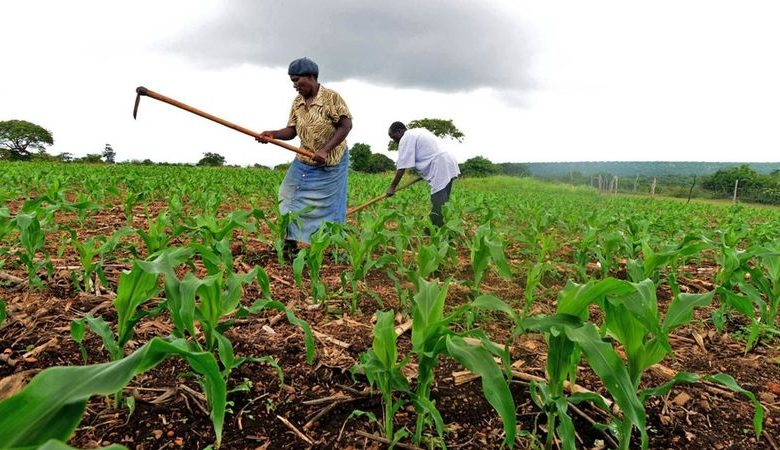
DAR ES SALAAM: FARMERS across Tanzania are accelerating preparations for the new agricultural season as uncertainty grows over the timing and reliability of rainfall, raising concerns about food production, incomes and overall market supply for the months ahead.
The Tanzania Meteorological Authority (TMA) projects that regions within the unimodal rainfall zone including Kigoma, Tabora, Katavi, Singida and Dodoma will receive belownormal to near-normal rainfall this season.
According to the forecast, Tabora, Katavi and Kigoma expected the onset between the third and fourth week of October, while Rukwa, Songwe, Mbeya, Iringa, Njombe and the southern part of Morogoro would begin receiving rains around the second to third week of this month.
The delayed and uneven onset is expected to narrow planting windows for major staples, forcing farmers to adjust their planning, input purchases and irrigation needs earlier than usual. In Kagera, farmers have begun switching to fastermaturing crops to avoid losses linked to fluctuating rainfall.
Speaking in a telephone interview with the ‘Daily News’, farmer Johnson Gwakisa said early planting has become essential to reduce risk.
ALSO READ: Sisal farmers push for modern processing factories
“The rains come and disappear quickly. I have already planted beans and vegetables so that even if the rains fall short, my crops can still mature on time,” Mr Gwakisa said.
In Kilimanjaro, maize and rice farmer Magdalena Shayo has begun planting while supplementing rainfall with irrigation from the Pangani system. She said the move is necessary as unreliable short rains disrupt traditional planting schedules.
“I have started planting and joined the Pangani irrigation system, which distributes water to our farms so that my crops continue growing even before the rains stabilise,” she said.
She added that farmer training programmes offered this year have helped growers adopt practices suited for unpredictable climate conditions. In Kigoma, governmentsupported soil testing is underway as authorities try to boost crop quality in the face of reduced rainfall.
Farmer Riziki Muhambwe said the initiative aims to ensure healthy yields despite seasonal uncertainty.
“We have already started our preparations as the government has provided strong support, and soil testing is being done to ensure we harvest healthy and goodquality crops,” he said.
Further south, Iringa fruittree grower Honest Munishi said changing rainfall patterns have pushed farmers to invest more in inputs to protect orchards from disease and nutrient deficiencies.
“I have begun preparing my farm for the rain by applying fertilisers and agricultural lime to strengthen my crops and prevent root problems,” Mr Munishi said.
In Dar es Salaam, smallscale farmers in Msongola Ward are combining rainfed and irrigated systems to stabilise production and protect income as rainfall becomes less reliable. Maize and fruit producer William Msofu said irrigation is now necessary to reduce the risk of crop failure.
“In this rainy season we hope for good yields, but we cannot rely on rain alone. We use irrigation systems to make sure our farms continue producing,” Mr Msofu said.
For others, agriculture remains a key financial safety net despite climate risks. Farmer Amina Yusuf said the income from vegetables and fruits, including cucumbers, continues to sustain her household.
“Farming has been very profitable for me. It has helped me take care of my family and run a business,” she said.
As farmers across the country step up preparation, irrigation and soil management investments, the season ahead will test how well climate-responsive practices can offset rainfall variability.
Many growers say the combination of improved information, early planning and government support may determine whether yields remain stable in an increasingly unpredictable climate environment.