Dignity reborn in the soil: The story of MTU KAZI

MBEYA: When you walk into the village of Uhambule, Mbarali in Tanzania’s Mbeya region, the air carries the scent of soil, sweat, and quiet determination. The young men and women of “Mtu Kazi” Group rise with the sun not to chase jobs, but to create them.
I first heard about Mtu Kazi during the Nane Nane Agricultural Exhibition in Dodoma 2025. The AGRA booth famously known as the YEFFA Pavilion was buzzing with youth voices, laughter, and the hum of ideas. Amid the noise, one young man caught my attention. His energy filled the space like sunlight.
He spoke passionately to anyone who would listen, standing beside sacks of rice seed that seemed to represent more than grain, they carried purpose. Curious, I turned my camera toward him. He noticed, straightened his shirt, and smiled.
“My name is Furaha Langson Mbuta, from Mbarali in Mbeya,” he said. “I’m a VBA and the leader of a youth group called “Mtu Kazi.”
The name made me smile. Mtu Kazi! — literally, “a person of work.” It sounded bragging, bold, almost like a promise. But there was something honest in his tone, something that made me listen. He told me how the group own rice seeds, buys and processes rice, owns a storage facility, runs a solar-powered office, and employs youth from the community. It sounded almost unbelievable, too polished for a village initiative.
And then he said something that stopped me cold. “Come to Mbarali and see for yourself,” he said. “Farming protects the dignity of youth.” That punch line was breathing and it struck me like a drumbeat. Farming that protects human dignity.
ALSO READ: DSE investors’ bullish ahead of Q3 earnings
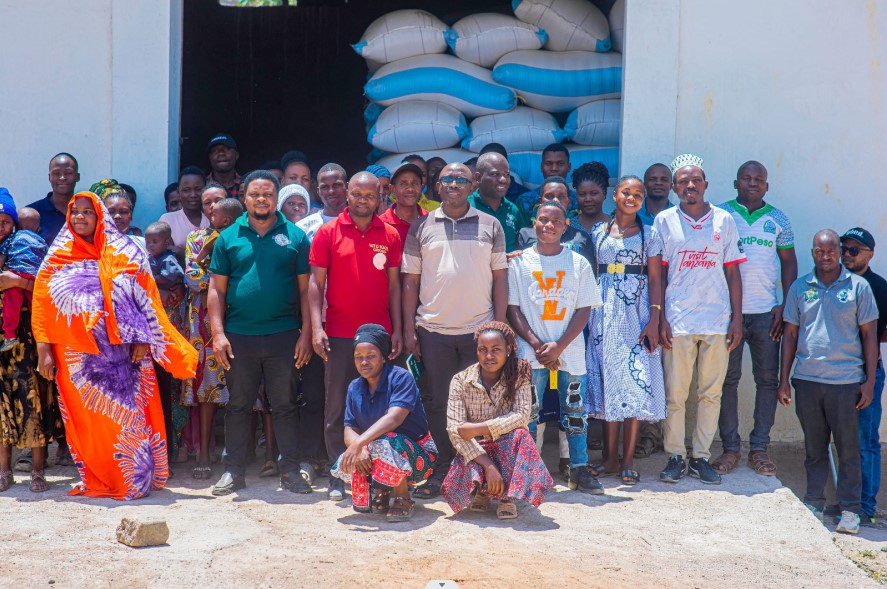
A few weeks later, I decided to see for myself. From Mbeya town, it was about an hour’s drive part asphalt, part dust, and a stretch of quiet countryside that looked like it had been waiting for rain and redemption in equal measure. When I arrived, I was greeted by a sea of smiling faces from youth in gumboots, women in headscarves, laughter floating in the wind. “Karibu Mtu Kazi!” they shouted as they waved me in.
And there stood Furaha — no longer a man selling dreams, but a leader surrounded by proof. Before me stretched a story that felt larger than life, one built by hands that refused to give up. A big storage godown holding tonnes of locally produced rice seed — SARO 5 TXD-306 QDS (Mtu Kazi Brand).
An office alive with movement, employing fifteen full-time youth. Over two hundred and fifty part-time workers engaged across nearby farms. A growing network of farm input agents linking farmers directly to companies and markets. It was more than progress. It was purpose.
When I asked Furaha again what he meant by “farming protects the dignity of youth,” he smiled the kind of smile that comes from deep understanding. “Look around,” he said. “We have unity, we have work, and we have dreams. We’re not rich yet, but our investment is worth millions. One day, you’ll come back and we’ll welcome you as the millionaires of Mbarali.”
He said it with a laugh, but there was truth behind that laughter and pride that no amount of money could buy. After meeting the Mtu Kazi group, I realized it wasn’t just Furaha who spoke like a leader, they all did. Even the members raised their hands eagerly, each one wanting to show me what they were doing. For some obvious reason and true to African hospitality they also shared their challenges, as they say “Mgeni njoo, Mwenyeji apone” (When a guest comes, the host should shine).
They gave me such warmth and respect that, for a moment, I wished I had brought something to give back. Maybe next time, I thought. But what struck me most was their sense of collective ownership. This wasn’t just a group; it was a family bound by purpose. Everyone knew their role, their dream, and their value. It was, in every sense, a model group, a living example of what unity, work, and belief can create.
I talked to Donald Mizambwa from AGRA, one of the partners supporting these youth through the YEFFA Project through ADP Mbozi. He told me how they first met the group — young, enthusiastic, but unstructured.
“We helped them organize and taught them to see farming as a business, not just survival,” Donald said. “They understood the lesson perfectly.”
He was right. Mtu Kazi was no longer just a farming group, it was a living symbol of what youth can build when they believe in their own hands. Today in Tanzania, young people are returning to the land, not out of desperation, but out of choice. Government programs like Build Better Tomorrow (BBT) and campaigns such as Mali Shambani are opening new paths, showing that agriculture is more than planting and waiting — it’s innovation, identity, and independence.
And there, in Mbarali, I saw it unfold. These youth are not just in agriculture sector to survive. They’re growing pride. They’re growing purpose. They’re growing humanity.
As the sun dipped behind the golden fields, Furaha looked across the horizon, his boots covered in dust, his eyes steady. “You see,” he said softly, “the soil listens to those who respect it.” And in that moment, it all made sense that sometimes, the richest thing a person can grow isn’t in the field, but in the heart.