Tribute to first native Attorney General Mark Bomani
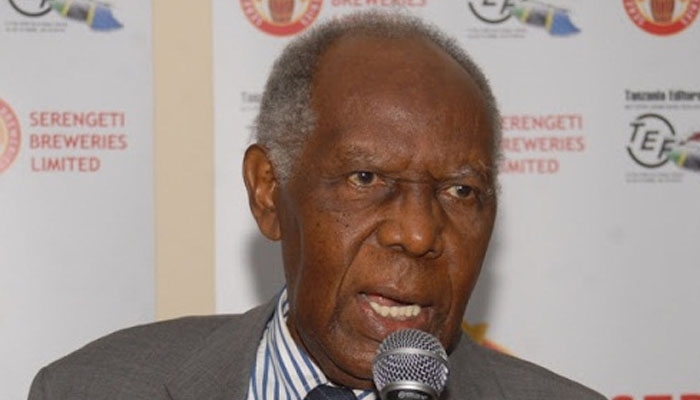
LUSAKA: FIVE years since he passed on, Judge Mark Bomani was one of the few educated Tanzanians at the time the country gained independence in 1961.
Three years after independence, he was appointed the first native Solicitor General in the Attorney General’s Chambers. Shortly afterwards, he was promoted to become the first native Attorney General.
After more than 11 years in office, he landed a job with the United Nations to lead the UN’s Institute for Namibia, based in Lusaka, Zambia.
When Namibia got independence, he was one of the consultants who assisted the South West African People’s Organisation (SWAPO) liberation movement to form a new government.
After he returned home from Namibia, he held several positions in public service before retirement. After he retired, he continued legal practice.
He had a private office off Maktaba Street in Dar es Salaam. Who’s Who Tanzania had an interview with him to talk about his exemplary life story. He died on September 10, 2020 aged 88 years.
The Daily News republishes this article in memory of the Retired Judge five years after his demise as a posthumous honour to him.
Hon Retired Judge Bomani, what recollections of your early life can you share? I was born on January 2, 1932, at Ushashi Village, at Seventh Day Adventist Missionary Centre in Bunda District, Mara Region, where my father was a pastor and a teacher.
Then, my father moved to Mwamanyili in Nasa, Mwanza Region. I was seven years old when I started schooling at Mwamanyili and I was taught by my father from Standard 1-4. I was born in a family of nine children, six of whom have passed on.
My secondary education began at Ikizu Mission School, 60 kilometres from Mwamanyili. In those days there were no buses, so I had to walk for two days to get there.
I did only one term at Ikizu as I was turned away for reporting one week late due to illness during my vacation! Fortunately, in 1945 the government opened a new government secondary school at Bwiru, Mwanza, where I applied and was granted admission. After five years at Bwiru, I sat for the Territorial Examination.
I was one of the only two pupils from our class of 28 students selected to join Standard 7 at Tabora School in 1951.
When I completed Standard 12, I sat for Makerere University College Entry Examination. Only six of us out of 52 learners passed the Makerere Entry Examination. So, I joined Makerere College in 1953.
Most, if not all of the academic staff at Makerere University were Europeans except Mwai Kibaki, the former President of Kenya, who had been retained as a Tutorial Assistant, after passing his Bachelor of Economics Examination with flying colours.
What did you study at Makerere University?
I studied Political Science and Economics for four years. When I completed my studies, I went to study law at London University in 1957 after working in Dar es Salaam briefly.
My law degree course took three years after which I joined Lincolin’s Inn, one of Britain’s four Inns of Court, where law graduates go for professional qualification.
At the end of the course, I was awarded a certificate and the title: “Barrister at Law”. Before returning home, I joined the Chambers of Lord Denning QC in London.
Lord Denning by the way, later helped to establish the faculty of Law at the University of Dar es Salaam.
Tell us about your reentry to Tanganyika.
After returning home in 1962, I spent about one year with the law firm of Fraser Murray to familiarise myself with domestic law before going to practise in Mwanza.
After two years of practice, I was requested to join civil service in Dar es Salaam. The pressure was so intense that I had to give in.
Mind you, there were only four native lawyers at the time, including Agustino Saidi, who later became the first Tanzanian Chief Justice (CJ).
So, at last you decided to serve your country! What position were you given then in the government after giving up your lucrative private practice?
I was appointed Solicitor General in the office of the Attorney General. Two years later, I was appointed Attorney General, the first native to hold the position.
I was also a nominated Member of Parliament and Member of the National Executive Committee (NEC) of the ruling party and served for 11 years.
What challenges did you face as the first native Attorney General?
There were many challenges. For example, there were very few lawyers at that time, mostly Indians and whites. There was no law school.
A new law school had to be opened in 1964 at Lumumba Adult Education Centre, which was later moved to Mlimani City.
Another challenge was the making of new laws to suit the local context. A Law Reform Committee was formed to address this. We had to streamline the judicial establishment, replacing chiefs’ courts with modern courts.
The present hierarchy – the Primary Court at the bottom, the Magistrates’ Courts in the middle and the High Court of Tanzania at the top – was adopted. We did not have a Court of Appeal then.
We were sharing the Court of Appeal of East Africa with Kenya and Uganda. We established our own Court of Appeal in 1979.
You were Attorney General when the first treason case was tried in Tanzania. Can you tell us what transpired?
Oh my God! This happened in 1969. A treason case is always emotive. I happened to prosecute in the absence of the Director of Public Prosecutions, a position that was created later.
The case was tried by Chief Justice Jelford Georges from Trinidad and Tobago, who was the first non-European Chief Justice.
Prosecuting this case was very challenging to me because I was still young and inexperienced, battling with Indian and English lawyers involved in the defence.
ALSO READ: Attorney General’s office improves laws to cope with Vision 205O
At the conclusion of a sevenmonth trial, the accused persons were found guilty, but were given light sentences because it had become obvious that long before the trial took place, the coup idea had lost steam.
Oscar Kambona was heavily implicated in the treason case. Can you explain the extent of his involvement and why he was not on the charge sheet?
Oscar Kambona in 1968 was the Secretary General of Tanganyika National Union (TANU), the ruling party, until he left for England after the Arusha Declaration.
Seemingly, Kambona and his followers were not supportive of the Arusha Declaration.
Kambona, being disgruntled, finally relinquished his position of Secretary General of TANU and sneaked out of the country, perhaps fearing apprehension.
How was he involved in the treason case, while he was not in the country?
While in London, he allegedly tried to coordinate a coup plan. Although a lot of evidence was adduced implicating him in the attempt, no steps were taken by the government of Tanzania to have him extradited because that was not considered worthwhile.
The Arusha Declaration ushered in a complete change of economic policy for Tanzania. How did this impact your job as Attorney General?
Yes, the Arusha Declaration was another challenge to me as Attorney General because we had to legislate new laws to implement the objectives of the Declaration.
For example, we made laws to regulate the setting up of Ujamaa villages. For this purpose, we came up with the “The Villages and Ujamaa Villages Act” and also “The Acquisition of Buildings Act,” among others.
It is of historic importance that you were involved in these two major policy initiatives for the development of Tanzania. Are you writing a book about this?
I keep postponing this, but “inshallah” one day I will write a book.
From Attorney General of Tanzania to joining the United Nations Institute for Namibia in Zambia, quite a big shift! What happened?
There was concern at the United Nations that the government of South Africa, which was mandated to administer Namibia after World War II, under the UN Trusteeship, was not doing much to prepare the former German colony for independence.
In fact, it appeared that the apartheid regime was planning to annex Namibia! The UN, therefore, intensified its efforts for Namibia’s independence.
One of them was to establish the Lusaka United Nations Institute for Namibia to prepare Namibians for independence.
Mr Sean MacBridge, a lawyer and former Foreign Minister for Ireland, who was Under Secretary-General at the UN Secretary General’s Office in New York, at the time, asked me whether I would help start the Institute.
I accepted, of course with Mwalimu’s approval. To take my position of Attorney General, I proposed Judge Francis Nyalali or Joseph Sinde Warioba. Mwalimu decided to appoint Warioba, who had been one of my assistants.
What was the precise mandate of the Institute for Namibia?
The Institute was to train Namibians in various fields of administration and independence law. We trained about 1,000 Namibians.
That process spanned 15 years, up to the elections in 1989. After the elections, the Institute moved to Namibia where it was transformed into the University of Namibia.
I did not go with the Institute. I went there as adviser to the new government of independent Namibia under the sponsorship of the United Nations.
On what matters did you advise the newly formed SWAPO government?
My major assignments to the government of independent Namibia included advising on matters of government and law.
I even conducted a workshop for newly appointed ministers.
Have you revisited Namibia since?
Yes, many times. The last time I was there was for the 25th independence anniversary, where I also attended the swearing in of Hage Geingob.
I had worked with Geingob to build the Institute at Lusaka. He was sworn in as the new President of Namibia.
I went there with my wife together with Hon John Malecela, Ambassador Ami Mpungwe, among others, at the personal invitation of Geingob himself.
When you returned to Tanzania in 1992, were you given any assignment in the government?
I was appointed a member of the National Electoral Commission (NEC) and a couple of other bodies, but this lasted for only about two years before resigning.
You also took part in the Burundi Peace Talks. How did you come to be involved?
When Mwalimu Nyerere, who was on retirement, was approached by the OAU to facilitate the Burundi Peace Talks, he asked me to join him. We travelled to Burundi twice on exploratory missions.
The peace talks started in 1996 in Mwanza, after which we moved to Arusha as more and more people got involved. We finally succeeded in getting all political parties to the conflict to join the talks.
How was Nelson Mandela involved in the negotiations?
Mwalimu unfortunately died in 1999 before finalising the talks. The leaders of OAU decided to appoint Nelson Mandela to take Mwalimu’s place.
Thabo Mbeki, the President of South Africa, offered to ask Mandela if he would take over from Mwalimu. Mandela wanted to know more about Burundi before responding.
I was sent to South Africa to brief him. After my briefing, he decided to accept the appointment.
When he came to Arusha for his first facilitation meeting, he told off the Burundian delegation that he did not understand why they were taking so long to agree! Under enormous pressure the Burundians reached an agreement and signed the Burundi Peace Accord in August 2000.
You have been Chairman of Serengeti Breweries, among other entities. How did you become Chairman of a brewing company?
It all started from Associated Breweries, a brewery owned by a few Indians with a very good German brewer.
A number of us got together and formed a group, mobilised funds and took over the company and I became one of the shareholders and its chairman.
I am still a shareholder, but I’m no longer its chairman. I retired from that office in 2014.
You also chaired the Tanzania Extractive Industries Transparency Initiative. What was that body supposed to do? This is an international organisation of countries with mining activities formed in 2011!
There were a lot of talks in Parliament and in the country generally that the mining sector wasn’t contributing much to the economy of Tanzania.
This concern became more and more vocal during Jakaya Kikwete’s presidency. So, President Kikwete appointed a committee with me as Chairman to review the mining sector.
In our report, we recommended, with the agreement of mining companies, that the government be given 10 per cent shares in all large mining companies (free of charge), plus a seat on the Board.
In addition, 25 per cent shares of the company be sold to Tanzanians. We also recommended that royalty be based on the gross value of minerals rather than on a net profit, a big difference.
You contested for nomination to run for the Presidency in the 1995 General Election. What made you decide to run for the top position?
I was requested to do so by many people, including the CCM Youth League (in the form of a letter).
I did very well actually in the nomination process: Securing the largest number of nominators (1,050) and ending up number four (4) in the NEC final nomination, out of 16 candidates.
Paradoxically, although original rules allowed five names to be submitted to the Party Congress for election, suddenly this number was cut to three, thereby excluding me for I was number four (4). Such is life!
What is your comment on the government thrust to attain middle income status by 2025 through industrialisation?
Industrialisation is both desirable and possible. However, there are certain basic things that have to be done for industrialisation to succeed, otherwise the effort may remain empty talks. We had industries which were well-established, but have collapsed.
For example, a beef canning factory at Kawe in Dar es Salaam was very successful in the 1970s. When I visited Lusaka, Zambia in 1973, I was surprised to see tinned beef made in Tanzania.
I saw “Okay” cooking oil on the shelves also made in Tanzania. Where are both of them today? How could the meat factory close when we have 25 million herd of cattle in this country that can support five to six Kawe-type of factories?
When there is so much demand for beef in this world and an industry like that one collapses, why? We have raw materials and the market, then the factory collapses, why?
These are some of the questions we have to ask ourselves before we seriously embark on wide industrialisation.
Tanzania is endowed with abundant raw materials, including fish and a long coastal line stretching 1,300 kilometres, but we don’t have a single fisheries factory along the coast.
In Namibia, for example, they have a thriving fish industry. Why don’t we have one in Tanzania?
So, we have to look at many factors, including the availability of market, infrastructure, funding, raw materials, skills and sound management. Since we have so much land, our industrialisation must mainly be agro-based.
You are a constitutional expert. What is your general view about African countries’ practice to amend national constitutions?
I don’t know. A Constitution reflects the character of each country. There is no prescription for all countries. Each country has its own prescription.
For example, to what extent do you want to decentralise the government? It depends.
The important thing is that whatever Constitution you draw up, you must observe certain principles. There is no point of drawing up a Constitution only to ignore it. It is a waste of time. The “Constitution” is a “sacrosanct document”. Do it very carefully. After you have done it, observe it.
You were a member of the National Electoral Commission, albeit briefly. There is demand that Tanzania should have an independent commission whose members are not nominated by the President. What is your opinion on this view?
You must be very clear about the purpose of establishing an Electoral Commission. An Electoral Commission is like a referee.
It should not lean on one side. It should be strictly impartial. It doesn’t matter how it’s formed whether elected by Parliament or appointed by the President as long as the people in the Commission stick to the rules and don’t give in to any kind of pressure.
To whom do you attribute your success in life?
To both my parents. My father was a priest and my mother was a God-fearing person. So, we were brought up under this environment.
You have to treat people with respect. Where there is no respect is shown, don’t answer back by being disrespectful yourself.
As an inspirational icon what advice do you have for the young generation of Tanzania?
Although we are born equal, each one of us has his or her own character, which means diversity. So, diversity must be recognised.
Don’t expect every person to be like you. Do your best and let them do the same to you. If they don’t, it’s not your problem.
Where you have to criticise them, do it in a manner that will help them and not humiliate them.
What are your hobbies?
Golf and swimming. I like golf. It’s a good game. You can still play it even at an old age. Swimming is also very good because water has a soothing effect on the body and mind.