Mkenda calls for clearer mandate as IAE marks 50 years

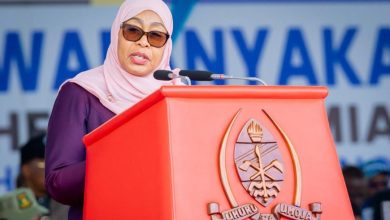
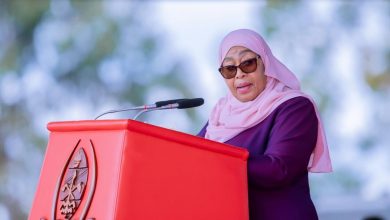
DAR ES SALAAM: MINISTER for Education, Science and Technology, Professor Adolf Mkenda, has called for a refined mandate of the Institute of Adult Education (IAE) to reflect current national and global education priorities.
Speaking when closing the symposium marking the 50th anniversary of the institute in Dar es Salaam, Prof Mkenda reflected on Tanzania’s historical journey in adult education since independence.
He recalled that the country’s first president, Julius Nyerere, declared poverty, disease and ignorance as the three enemies that had to be defeated.
Prof Mkenda said ignorance at the time was largely linked to illiteracy, which prompted a nationwide mass campaign to teach adults how to read and write.
Though community-driven and without formal structures, the campaign succeeded in reducing illiteracy across the country.
“The Institute of Adult Education was created to provide learning outside the formal school system, including evening classes. But in its early days it mainly served the urban middle class, seeking structured, curriculum-driven credentials. It did not fully align with Mwalimu Nyerere’s vision of reaching rural communities,” Prof Mkenda explained.
The Minister said that while formal education, particularly following the Musoma Resolution of 1974 and the introduction of Universal Primary Education in 1975, has greatly expanded literacy, IAE still has a vital role in today’s society.
“Through this symposium and exhibitions, it is clear that the institute’s work goes beyond teaching basic literacy. We must define its responsibilities more precisely so that they complement other opportunities such as the Open University of Tanzania (OUT), evening university programmes, Vocational Education and Training Authority (VETA) and Folk Develop ment Colleges (FDCs), as well as the HEET project that is expanding campuses in every region,” he said.
Prof Mkenda assured that the ministry will work with experts to provide a clearer direction for the institute, safeguarding its relevance and ensuring it supports the lifelong learning agenda. On his part, the Head of IAE, Prof Philipo Sanga, outlined resolutions reached at the symposium to strengthen the adult education subsector.
“In order to process what has been heard in the discussions and presentations, we have come up with resolutions that will help us move forward with implementation,” he said, thanking the presenters who contributed to refining the current interpretation of adult education.
The first resolution, he said, is for the government through the Ministry of Education, Science and Technology to prepare a policy document that would allow students who completed primary or secondary education but failed to proceed further to join alternative education pathways.
“No one should be left behind in acquiring knowledge and skills,” he stressed.
The second resolution calls for every ward in the country to establish an inclusive community learning centre, modelled on four existing pilots in Coast and Dodoma regions.
These “one-stop centres” would provide adults with opportunities to learn practical knowledge related to their livelihoods, such as fishing and agriculture.
The third resolution is to review the guidelines governing adult education committees at all levels, to ensure they are in line with the current context and provide clarity in responsibilities.
Prof Sanga further said the symposium resolved that adult education departments should be created at all levels of implementation to ensure sustainability and effective coordination.
Prof Mkenda said the 50th anniversary celebration not only showcased IAE’s work but also allowed Tanzania to learn from neighbouring countries such as Namibia and Botswana.
“I have no doubt that we need this institute, but its mandate must be articulated in a way that reflects today’s realities. Once that work is complete, we will have a clear path forward,” he said.