

UK launches initiative to boost agric growth
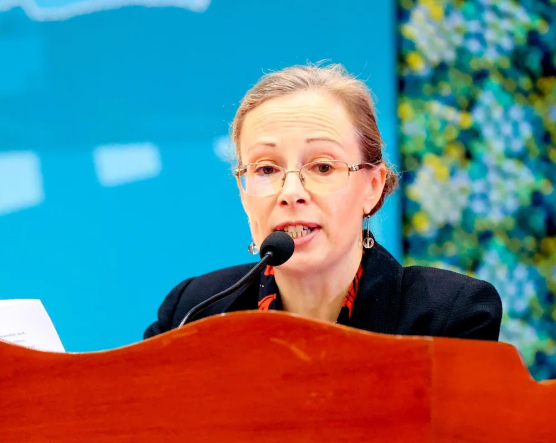
DAR ES SALAAM: BRITISH High Commissioner Ms Marianne Young has unveiled a new initiative under the UK’s Mutual Prosperity Partnership, aimed at promoting agricultural growth and supporting broader economic development.
Ms Young highlighted agriculture as a critical engine for inclusive growth, reaffirming the UK’s commitment to supporting innovation and resilience in the sector through strategic partnerships and shared expertise. “
The ‘Productivity for Prosperity’ programme is designed to revitalise the agricultural sector by empowering small and medium-sized enterprises (SMEs) that play a central role in agricultural value chains,” she said.
The British High Commissioner made the remarks on Monday during the official opening of the four-day Agriculture, Nutrition and Health (ANH2025) Academy Week in Dar es Salaam.
“Our productivity for prosperity programme aims to catalyse 100 million euros of investment into agriculture SME through providing a technical assistant to building capabilities of SME to attract scaling up financing,” Ms Young said.
She said the UK aims to foster long-term economic resilience and shared prosperity by strengthening the operational capabilities of SMEs and making them more attractive to investors and financial institutions.
By focusing on capacity building, the programme will support SMEs in scaling up and modernising their operations, bridging the gap between grassroots farming and large-scale agribusiness.
“This initiative is a timely intervention to unlock the growth potential of a sector that is vital to food security, employment and economic development,” she said.
The British High Commission reiterated its commitment to inclusive and sustainable development in partner countries, highlighting agriculture as a key pillar.
Speaking at the event, Prof Suneetha Kadiyala, a Global Nutrition expert at the London School of Hygiene & Tropical Medicine (LSHTM), said the gathering in Tanzania reflects the strong political will and regional leadership necessary to drive meaningful change in food systems.
She emphasised that research must move beyond academic discussion and focus on practical, scalable solutions that improve people’s lives.
ANH 2025 brought together a diverse mix of researchers, policymakers, civil society actors and development partners to share the latest evidence and innovations in food security.
ALSO READ: AgriTech: Harnessing tech to transform agriculture
The ANH community has played a role in shaping real systemic changes that matter for people on the ground, including food-based dietary guidelines in Senegal, the Sindh Women Agricultural Workers Bill in Pakistan and the Kampala Declaration of 2024.
Meanwhile, Prof Joyce Kinabo from the Department of Food Technology, Nutrition and Consumer Sciences at Sokoine University of Agriculture (SUA) noted that while increasing production has long been the focus of agricultural policy, it is now time to consider how food is accessed, prepared and consumed within communities.
She stressed that consumption-related issues are central to addressing malnutrition and must be reflected in policy and programming across all sectors.



96712 680708I discovered your weblog web site on google and check a few of your early posts. Continue to maintain up the very great operate. I just additional up your RSS feed to my MSN News Reader. Seeking forward to reading far more from you later on! 559541
150882 280995Sweet website, super pattern , real clean and utilize genial . 594337
284446 588613Extremely usefull weblog. i will follow this weblog. keep up the good function. 376144