Zanzibar unites for drug-free future on 2025 World Drug Day
ZANZIBAR: AS the world commemorates the International Day against Drug Abuse and Illicit Trafficking each year on June 26, Zanzibar has marked the 2025 observance with a resounding call to invest in prevention and education.
This year’s theme, “Evidence is Clear: Invest in Prevention,” has galvanised government agencies, educators, health workers, security institutions and the public around a common goal, to create a society free from the devastating effects of drug abuse.
Zanzibar’s week-long campaign, organised by the Zanzibar Drug Control and Enforcement Authority (ZDCEA), included a series of public events held from June 14 to 26 across Unguja and Pemba.
These activities focused on raising awareness, building institutional capacity, and empowering communities, particularly young people, with knowledge and support.
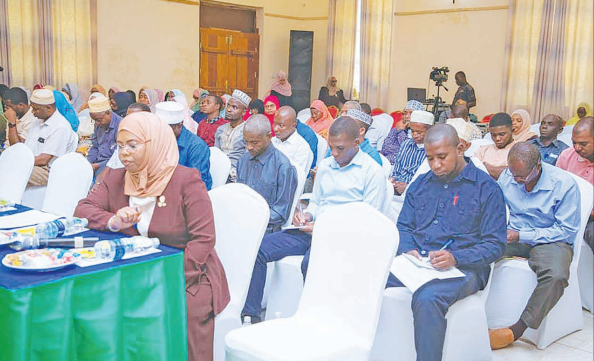
One of the most significant events was a forum held on June 17 this year at the ZSTC Hall in Chake Chake, Pemba, where headteachers from across the island gathered for a special education seminar.
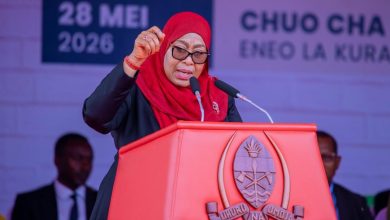
The forum was officiated by Minister of State, Office of the First Vice President (Environment, Ant-illicit drugs, HIV/AIDS, and PWDs), Ms Harusi Said Suleiman who emphasised the vital role of schools in the national fight against drugs.
“Zanzibar is not immune to the global scourge of drug abuse,” Minister Harusi told the educators. “Our youth, some as young as nine years, are increasingly falling victim to drugs, jeopardising not only their future but the future of our country.”
She called on teachers to become ambassadors of prevention, noting that drug abuse leads to severe health consequences such as mental illness, HIV, liver infections, and in many cases, sudden death. Social consequences, including crime, corruption, school dropouts, and homelessness, further strain the social fabric.
To address these issues, ZDCEA is promoting school based interventions such as the formation of anti-drug clubs in primary, secondary, and tertiary institutions, and community sensitisation through outreach programs.
The Authority is also intensifying land and sea patrols, with ongoing arrests, prosecutions, and asset seizures. So far, assets worth over 16bn/- have been confiscated from drug traffickers.
The campaign expanded to the streets and sports fields, engaging a wider cross section of society. On June 21, a mass fitness walks and bonanza was held in Stone Town, attracting recovery groups, youth sports teams, security forces, and civil servants.
The vibrant procession wound through MwembeKisonge, Kariakoo, Darajani, and Mlandege, symbolising the collective journey toward a drug-free Zanzibar.
Later that evening, a football match between Mazombi FC and Al-Misri FC at Mao Zedong Stadium drew hundreds of spectators. Speaking at the event, Minister of Youth, Culture, and Sports, Ms Tabia Maulid Mwita, praised the use of sports to promote health and resilience among young people.
As the campaign gained momentum, stakeholders from the health sector gathered at the Shaa Training Institute for a high-level seminar. Representatives from the Ministry of Health, the Chief Government Chemist, the Zanzibar Food and Drug Agency (ZFDA), methadone programmes and private hospitals discussed how to integrate drug prevention and treatment into their services.
Minister Harusi emphasised that drug abuse is not merely a criminal justice issue, but a public health crisis that demands collaborative solutions.
Presenting achievements from 2020 to 2024 in the House of Representatives, Minister Harusi outlined the scale of the challenge. Between 2020 and early 2025, a total of 1,220 suspects, including 51 women were arrested for drug-related offenses.
This included, she said, 757 cases involving cannabis; 463 heroin cases; and additional cases involving cocaine, codeine, valium, morphine, methamphetamine, and other substances.
Out of 1,198 reported cases, 755 were taken to court. As of this year, 179 convictions have been secured while 171 cases remain ongoing. Additionally, 1,619.86 kilograms of drugs have been destroyed, demonstrating the tangible impact of law enforcement efforts.
The campaign’s reach has also expanded through public education. Between Unguja and Pemba, 7,343 students and 71 teachers have been trained. In communities such as Wesha, Mchanga Mrima, Mbuzini, and Ngwachani, over 1,100 residents received anti-drug awareness education.
Furthermore, a toll-free number (0774333300) was established for the public to anonymously report drug-related crimes. Since its launch, 415 reports have been acted upon.
As part of its rehabilitation strategy, the government has completed a treatment and behaviour correction centre in Kidimni, where 132 addicts have received care. Of these, 25 have successfully completed the program and were supported with entrepreneurial kits such as sewing machines, livestock, and carpentry tools, valued at 4m/- to help rebuild their lives.
ALSO READ: Zanzibar to lower budget dependence
Despite these achievements, challenges remain. Budget constraints limit the reach of programs, and social stigma deters many families from reporting or seeking help. Minister Harusi reiterated that the fight against drugs is a shared responsibility.
“It is not the sole duty of ZDCEA. Schools, communities, families, and every individual must play their part,” she said. “Together, a drugfree Zanzibar is possible.”
As Zanzibar joins the rest of the world in marking World Drug Day, the message is clear: real change requires sustained investment in prevention, community involvement, and inter-agency cooperation. With such steps, the archipelago moves closer to a future where every child and young adult can thrive, free from the chains of addiction.