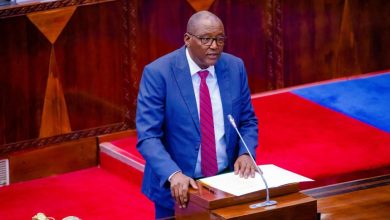
UHI to tame health inequality, PM affirms

DODOMA: PRIME Minister Dr Mwigulu Nchemba has said that the Universal Health Insurance (UHI) is not just a bureaucratic reform, but a social protection mechanism designed to reduce inequality.
He said the scheme will give poorer Tanzanians access to healthcare without financial hardship, ultimately contributing to better health outcomes and less poverty.
“The scheme being introduced in the country is expected to help solve health-access problems for the vulnerable population,” he said when responding to a question from Dr Rita Kabati (Kilolo- CCM).
During the impromptu question-answer session to the Premier in the National Assembly yesterday, Dr Kabati wanted to know the government’s plan to educate the public on the necessity to join the scheme.
Dr Nchemba said UHI is crucial mainly because the design and implementation of the scheme aim to protect low-income and vulnerable populations from the financial burden of healthcare and improve equity in access to essential medical services.
Under the UHI plan, Dr Nchemba said the government will subsidise insurance premiums for the poorest and most vulnerable groups, including elderly people, children, pregnant women, persons with disabilities and low-income households.
“These groups will have their contributions fully or largely covered by the government, enabling them to access health services without needing to pay upfront when sick.
One of the biggest reasons many poor Tanzanians have struggled with health access is that high out-of-pocket costs force households to pay directly for care, often pushing families into deeper poverty.
“UHI aims to reduce these direct payments by pooling risk and spreading costs across the whole population,” he said.
ALSO READ: Nurturing youth mental health in connected world
He said by making health insurance mandatory for all residents, the UHI Act helps bring large numbers of uninsured Tanzanians into a system where their care costs are shared across a broader pool.
This broader risk pool makes the system more sustainable and increases the chances that poorer households will receive care without facing huge costs and challenges.
The scheme reflects a policy shift toward greater equity in health financing, where those who can afford to contribute help support those who can’t, a principle often described as collective responsibility.
This reduces disparities between rich and poor in who gets timely and quality care.
He also said that the government is well prepared to ensure effective and efficiency services are provided countrywide, so as to attract all citizens to join the scheme.
The Premier said President Samia Suluhu Hassan had promised that within 100-days in office after being sworn in for her second term, the government will recruit 5,000 medical personnel.
“I want to let this House know that already the 5,000 health personnel have been recruited and deployed to various dispensaries, health centres and hospitals across the country,” Dr Nchemba said.
He also said that the government will also continue to ensure availability of medical equipment and medicine as well as quality buildings countrywide.
He also called on Members of Parliament, councillors and local government leaders to keep educating the public on the importance of joining the UHI scheme.
In implementation and identification of beneficiaries, government agencies are finalising systems to identify poor and vulnerable households so that subsidies and insurance benefits are directed where they are most needed, ensuring that eligible families don’t get left out of the insurance roll out.
Meanwhile, Ushetu Member of Parliament, Emmanuel Cherehani (CCM) raised concern about patients being required to pay a medical consultation fee to see a doctor.
Mr Cherehani also said that some health facilities increased their service charges.
He said that higher consultation fees even for basic doctor visits discourage people from seeking care, especially in public hospitals where services were previously more affordable.
Responding to the concern raised, Dr Nchemba said that under the Universal Health Insurance (UHI) Act, the requirement to contribute under various categories applies to individuals who are not enrolled in the scheme and it is these individuals who are required to pay medical consultation fees.