Tanzania makes strides in war against drugs
DODOMA: SIGNIFICANT efforts to curb the production, trafficking and use of illicit drugs together with intensified crackdowns on drug trafficking syndicates are yielding results, with the latest report showing a notable decline in cocaine and heroin trade in the country.
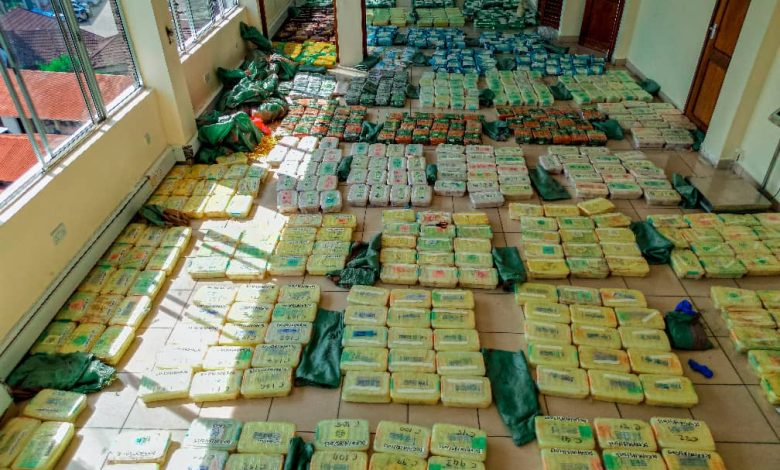
The Drug Control and Enforcement Authority (DCEA), in collaboration with other security agencies, has intensified the war against illicit drugs, leading to the confiscation of 2,307 kilogrammes of cannabis, making it the most seized drug.
Minister of State in the Prime Minister’s Office (Policy, Parliament and Coordination), Mr William Lukuvi revealed this in Dodoma on Monday when briefing journalists on a “Report on the State of Illicit Drugs for the Year 2024 in Tanzania”.
According to the minister, of the seized drugs, 2,303.2 tonnes were locally produced cannabis, while 4.17 tonnes were high-THC cannabis known as Skunk, smuggled into the country from some Southern African countries.
According to the report which was initially presented in the National Assembly, the amount of skunk seized increased by 89.8 per cent compared to the previous year, signalling enhanced control of the drug trade in the country.
“Additionally, khat, another farm-based drug, was seized in significant quantities, as 18.45 tonnes were confiscated during various operations nationwide,” he stated.
ALSO READ: PCCB commends govt for boosting anti-corruption infrastructure
He added that on the industrially manufactured drugs, the government successfully seized 1.7 tonnes of methamphetamine, 433.02 kilogrammes of heroin, and 853 grams of cocaine.
He noted that the government also seized five kilogrammes of a new psychoactive substance known as methylenedioxy-pyrovalerone (MDPV), which was being smuggled into the country.
“These achievements are the result of rigorous work by our security agencies in controlling trafficking routes through borders, airports and seaports,” he said.
In addition, the government has strengthened the monitoring of precursor chemicals and medical drugs with narcotic properties to prevent their diversion and misuse for producing illicit drugs. In 2024, a total of 19.2 kilogrammes and 22,682.4 litres of precursor chemicals and 56.78 kilogrammes and 200 millilitres of narcotic medical drugs were seized.
Moreover, through electronic systems, the government successfully blocked the importation of 29.6 tonnes and 125 litres of precursor chemicals.
To improve services for drug addicts, he briefed, the government continued to provide methadone treatment for opiate addicts, especially heroin users, through 16 centres, registering 17,975 addicts. Furthermore, 62 sober houses continued to provide recovery services to 17,230 drug users, being a step in helping addicts return to healthy lives.
He thanked President Samia Suluhu Hassan for her unwavering commitment in the fight against illicit drug trade by “fully empowering the Drug Control and Enforcement Authority as well as our security and defence forces, health professionals, stakeholders and the general public whose collective effort has helped realise the achievements I have outlined.”
“This collaboration is a key weapon in the war against drugs, as this is a cross-sectoral issue involving stakeholders in health, security, education, employment, social welfare and more. True success requires joint efforts from the government, society, private institutions and international partners,” he stated.
Responding to questions from journalists, the Commissioner General of the Drug Control and Enforcement Authority (DCEA), James Lyimo, said that shisha has not been listed among illicit drugs.
However, the authority is aware that some individuals are mixing it with banned substances, including cannabis. He noted that a bill aimed at regulating the use of shisha mixed with such substances is currently in the pipeline, and the public will soon be engaged to provide additional input.
The Commissioner further explained that although several countries have legalised the cultivation of cannabis and that large companies had initially pledged to purchase it for medicinal purposes, many of those companies failed to fulfill their commitments.
He revealed that, due to Tanzania’s ban on cannabis cultivation, some Tanzanians sought licences in other southern African countries where cultivation is permitted.
However, they suffered financial losses after companies failed to make the promised purchases.
The government shared these developments as part of its report on the progress in the fight against illicit drugs, ahead of Tanzania’s participation in the International Day Against Drug Abuse and Illicit Trafficking also known as World Drug Day which is observed globally on June 26 each year.