Education’s 2.44tri/- budget focuses on training
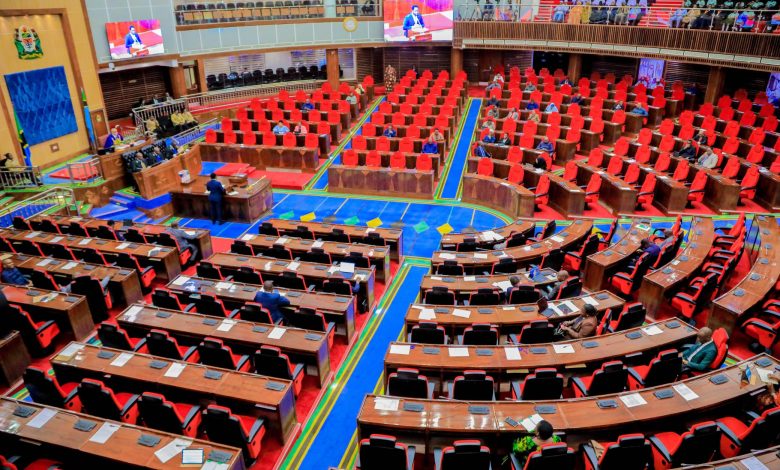
DODOMA: THE National Assembly has approved a 2.44tri/- budget for the Ministry of Education, Science and Technology for the 2025/26 financial year, with the government announcing a major shift toward vocational and technical education as a strategic response to youth unemployment.
Winding up the budget debate in the National Assembly on Monday, Minister for Education, Science and Technology, Professor Adolf Mkenda, said the government is implementing transformative reforms under a new vocational education pathway aimed at expanding access to skills-based training.
Under the new model, OLevel secondary schools have been restructured to offer two streams—general education and technical/vocational training.
“Most of the schools we are reviving were originally vocational institutions,” said Prof Mkenda.
“We are also establishing sector-specific vocational schools in areas such as agriculture, sports and hospitality.”
Upon completion of Form Four, students enrolled in vocational streams will graduate with both a standard Form Four certificate and a skills certification issued by National Council for Technical and Vocational Education and Training (NACTVET).
Students wishing to pursue higher technical education will transition into a three-year high school programme focused on hands-on, technical training, essentially reviving the former polytechnic model.
“We’re reintroducing this model and establishing polytechnic schools in Mwanza, Kigoma, Mtwara, Morogoro and Zanzibar,” Prof Mkenda said, adding that a fullyfledged technical college has already been completed in Dodoma and integrated with the Dar es Salaam Institute of Technology.
He underscored the importance of proper investment in vocational training to maintain quality and credibility.
“We must avoid the risk of creating under-resourced vocational schools that erode public trust,” he warned.
“We’ve seen reforms fail elsewhere for this very reason.” To support the reforms, outdated school workshops are being modernised, with new equipment expected from India, China, South Korea, Germany and Switzerland.
The ministry is also open to hiring foreign instructors to address existing training gaps.
“We’re taking a phased, cautious approach to ensure success. Vocational schools will not be rolled out without the necessary tools and qualified trainers,” he assured.
Prof Mkenda also said that the Samia Scholarship will support 50 to 100 topperforming science students from the 2025 Form Six cohort to pursue studies in Data Science and Artificial Intelligence (AI).
The students will first undergo a 10-month preparatory boot camp at the Nelson Mandela African Institution of Science and Technology, focusing on patriotism, ethics, culture and digital literacy.
The government will fully fund their undergraduate studies abroad. A total of 5bn/- has been allocated for the initiative in the upcoming fiscal year.
“This scholarship will strengthen the country’s capacity in AI and statistical sciences,” the minister said.
ALSO READ: Tanzania’s Industry, Trade Ministry tables 135.8bn/- budget for 2025/26
He added that the government plans to leverage unused foreign scholarships, offered by countries such as Saudi Arabia, Hungary and China, to train more Tanzanian students, particularly from farming and pastoralist backgrounds.
Prof Mkenda also revealed that five students will be sent abroad to pursue Master’s degrees in nuclear-related fields as part of efforts to build local capacity for the Tanzania Atomic Energy Commission.
The minister urged private institutions to invest in vocational education, promising that the government will help link eligible students to affordable private training centres when public facilities reach capacity.
He also addressed the issue of volunteer teachers, stating that more than 23,400 individuals are currently serving under guidelines issued to local governments and called for continued collaboration with school committees.
Deputy Minister for Education, Mr Omar Kipanga, informed the House that the construction of 64 new VETA colleges is progressing in line with President Samia Suluhu Hassan’s pledge to ensure every district has a vocational training centre.
“So far, over 72bn/- has been released in the first phase out of the planned 100bn/-,” he said.
“Construction is 45 per cent complete and we aim to finish the first nine buildings by October to allow short courses to begin in November.”
A total of 2.5bn/- has been allocated in the 2025/26 budget for the purchase of training equipment for the new colleges.
Special Seats MP, Ng’wasi Kamani (CCM) said the vocational curriculum will equip students with both academic and practical skills by the time they complete Form Four.
“This curriculum responds to real-world needs. By 2027, we’ll begin to see the results and we’ll all recognise its value in national development,” she said, pointing to China’s industrial success driven by long-term vocational training.
Dr Thea Ntara (CCM), urged the Ministry to run awareness campaigns, noting that many parents still underestimate the value of vocational education. She recommended using media to showcase success stories and raise awareness.
Muleba North MP, Charles Mwijage, advocated for the revival of agriculturefocused vocational schools, citing former institutions like Kibiti, Ruvu, Kilosa and Nyakato.
“The future competitiveness of this country lies in agriculture,” he stated.
He also made a bold appeal for the government to prioritise employment of the 268,000 unemployed teachers across the country.
“Call it a national project—employ them all. If funding is a challenge, let’s look at where we can reallocate. This is an army ready to serve the nation,” Mwijage urged.