Dar Declaration: Turning point for Africa

DAR ES SALAAM: AFRICAN Heads of State have adopted the Dar es Salaam Declaration, a landmark commitment to advancing electricity access across the continent and unlocking the full potential of Africa’s energy resources.
The declaration sets an ambitious goal to provide affordable electricity to 300 million people across Africa within the next five years.
The Dar es Salaam Declaration outlines key strategies to lower electricity costs, re duce dependence on firewood and increase clean energy production, offering hope for a brighter and more sustainable future for millions.
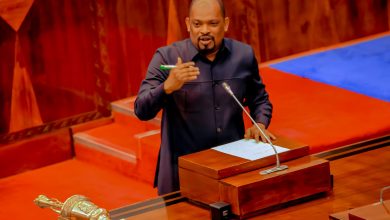
Reading the Declaration at the Julius Nyerere International Convention Centre (JNICC) in front of Heads of State and Government yesterday, Secretary General of the African Development Bank (AfDB), Professor Vincent Nmehielle said the document addresses crucial areas such as expanding clean cooking and electricity access and increasing the share of renewable energy in the continent’s energy mix.
“With the aim of pro viding access to 300 million people in Africa, we commit to bold actions and political support through the adoption of this declaration,” he said.
At the Summit, African Heads of State requested the African Union (AU) Commission to submit the declaration to the AU Assembly for consideration and adoption.
The declaration aims to enhance private capital mobilisation and prioritise actions to efficiently rehabilitate and expand power generation, transmission and distribution infrastructure. It advocates for cost effective power systems planning that incorporates both national resources and regional energy generation options through competitive and transparent procurement processes to secure the best prices.
ALSO: Tanzania unveils comprehensive energy access plan
The declaration underscores the importance of regional integration by in vesting in interconnections, harmonising transmission planning and fostering cooperation among African na tions. This will help unlock the continent’s full energy potential, including gas, hydropower, solar, wind, geothermal and other clean energy sources.
The document also focuses on renewable energy and clean cooking solutions as essential elements of the energy access agenda. It adopts a multi-tier framework for energy access and emphasises energy efficien cy and national clean cooking strategies with realistic targets.
Professor Nmehielle further explained that the Declaration prioritises private sector participation by creating an enabling environment through supportive regulations, effective fiscal policies, incentives and innovative financing mechanisms based on cost-benefit analysis.
The declaration also includes measures for in stitutional strengthening and capacity building, fo cusing on the timely and successful implementation of energy projects while fostering synergies with existing partnerships.
Moreover, the decla ration commits to priori tising gender equality by accelerating energy access for women and creating opportunities for employ ment and entrepreneurship in the energy sector.
It calls for the priori tisation of African countries’ budgets, complementing resources from government partners, philanthropies and the private sector, to achieve the objectives of Mission 300.
The summit, centered on Mission 300—a critical initiative aimed at address ing Africa’s energy defi cit. Currently, 600 million people across the continent lack access to electricity, a significant barrier to eco nomic growth.
“This Declaration rep resents a turning point for Africa’s energy future,” said President Samia Suluhu Hassan. “We are committed to delivering affordable, reliable electricity to transform lives and economies across the continent.” Leaders at the summit highlighted the importance of investments in renew able energy, such as solar and hydroelectric power and pledged to improve infrastructure and create policies that attract private sector involvement.
Tanzania, a key player in the East African Power Pool, plans to increase electricity production by 2,463 megawatts by 2030, requiring 13 billion US dollars in funding.
The initiative has gar nered significant support, with 40 billion US dollars (about 100tri/-) committed by the African Develop ment Bank (AfDB) and the World Bank. AfDB President Dr Akinwumi Adesina em phasised that achieving universal energy access is vital for Africa’s econom ic transformation.