

Tanzania’s economy sees brighter 2025 despite geopolitical tensions
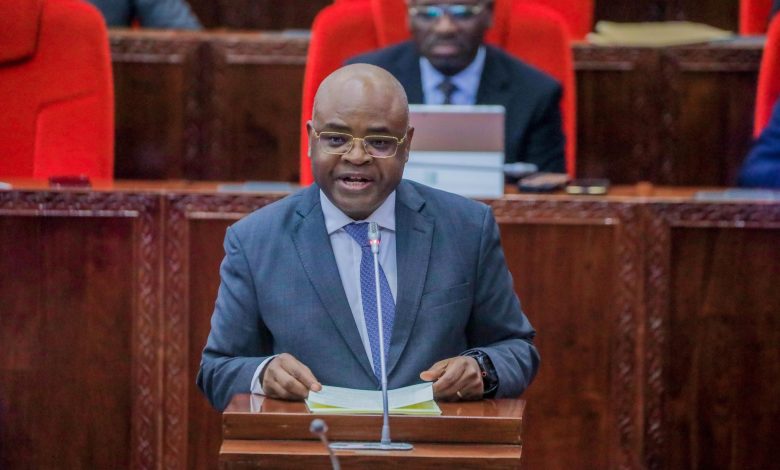
DODOMA: AS global economic growth has remained sluggish, Tanzania’s economy shows strong prospects for 2025 as the government continues to implement its development plans to promote economic growth, create jobs, and improve its citizens’ livelihoods.
The Minister of State in the President’s Office for Planning and Investment, Professor Kitila Mkumbo made the statement today in Parliament in Dodoma while presenting the Government’s Proposed National Development Plan for the Year 2025/26.
He noted that Tanzania’s economy has continued to strengthen despite global economic challenges, highlighting the resilience of the country’s economic fundamentals.
He said the global economic growth has remained sluggish, with the world economy growing by 3.2 percent in 2024, compared to 3.3 percent in 2023.
He revealed this in his presentation of the Government’s Proposed National Development Plan for the Year 2025/26, which he delivered today in Parliament in Dodoma.
According to the October 2024 World Economic Outlook report by the International Monetary Fund (IMF), Professor Kitila noted that no major changes are expected in 2025, with the global economy projected to grow by 3.3 percent.
ALSO READ: Tanzania’s economy grows by 5.4 percent
He explained that the main reasons for the slow global economic growth include an aging population, declining productivity in developed countries, continued geopolitical tensions and conflicts, and monetary tightening policies in the United States and Europe aimed at controlling inflation.
Regarding the African region, the Minister reported that the economies of member states of the Southern African Development Community (SADC) grew by an average of 3.4 percent in 2024, down from 3.9 percent in 2023. Member states of the East African Community (EAC) recorded an average growth of 5.1 percent in 2024, compared to 5.2 percent in 2023.
He attributed the slowed growth in these regions to rising inflation, higher borrowing costs in international financial markets, a decline in aid and concessional loans, the effects of climate change, and ongoing global conflicts, including the war in Ukraine.
For 2025, the EAC economies are projected to grow by 5.7 percent, while SADC countries are expected to achieve growth of 4.1 percent.
Despite these challenges, Professor Kitila emphasized that Tanzania’s economy has remained resilient and is being successfully managed through the implementation of development projects, sound fiscal and monetary policies, and effective inflation control.
He added that domestic economic indicators show strong prospects for 2025, as the government continues to implement its development plan aimed at promoting economic growth, creating jobs, and improving citizens’ livelihoods.



480201 196613You developed some decent points there. I looked more than the internet for your problem and discovered many people will go along with together together with your web site. 926052