NEW 3Rs STRATEGIC FRAMEWORK: Samia demands results
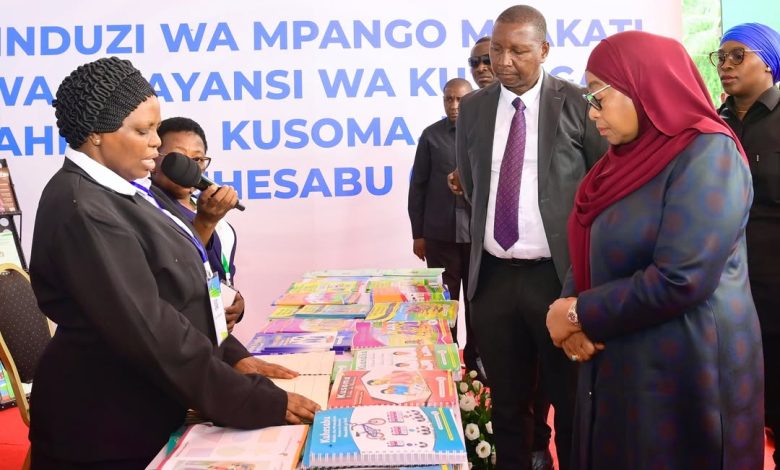
DAR ES SALAAM: PRESIDENT Samia Suluhu Hassan yesterday called for tangible learning outcomes in children rather than paperwork as she launched the Scientific Strategic Framework for Foundational Reading, Writing and Arithmetic (3Rs).
The new 3Rs strategic framework sets a new direction for early childhood and primary education in Tanzania.
The Head of State said the success of the new strategy must be measured by what children are able to do in classrooms and within their communities.
“The changes must be seen in children, not in written reports,” President Samia stressed.
She directed the Ministry of Education, Science and Technology, the President’s Office–Regional Administration and Local Government (PO-RALG) and other relevant sector ministries to work closely to ensure the framework is fully and effectively implemented so that it delivers tangible and lasting benefits to learners and the nation at large.
The President emphasised the importance of early assessments to identify challenges in reading, writing and arithmetic, noting that timely interventions will help prevent learning gaps from widening.
“Early evaluations will help us detect difficulties in foundational skills and address them before they become permanent obstacles to learning,” she said.
She also called on parents and guardians to fully cooperate with the government, saying the success of the programme depends on collective responsibility.
“Education is not the responsibility of the government alone. Parents, guardians and the entire community must be part of this effort,” she said.
President Samia said the strategy is among the commitments she made within the first 100 days after launching her election campaign last year and forms part of the implementation of the Tanzania Development Vision 2050.
She added that the framework aligns with the 2014 Education and Training Policy and the 2013 curriculum reforms, which aim to empower citizens with knowledge, skills, values and the capacity to contribute to national development and well being.
ALSO READ: Dr Samia launches RWA, a scientific initiative for young learners
“That is why we improved compulsory education to ten years, to ensure our children are well prepared, competent and competitive,” she explained.
She said the strategy also implements key international commitments, including the African Union’s 2024 resolution on Educate and Skill Africa for the 21st Century under Agenda 2063, as well as the United Nations Sustainable Development Goal Number Four on quality education.
Describing the programme as a cornerstone for building a knowledge-based economy, President Samia said it would provide children with a solid foundation to pursue various professions and contribute meaningfully to society.
“A child who masters reading, writing and arithmetic at an early age develops a stronger ability to understand new knowledge, think critically, ask questions and actively participate in learning,” she said.
The President emphasised that technology will play a central role in the framework, with priority given to locally developed solutions.
“Technology should be our priority in this area, and this technology must come from our own people. We will move strongly in this direction because we are developing these tools locally,” she said.
She reaffirmed the government’s commitment to ensuring that every child can read, write and count by Standard Three, including learners with special needs.
“Any nation that wants a competitive economy must invest early in foundational learning. This is not optional; it is a responsibility of the government, parents and society as a whole,” she said.
Highlighting progress in expanding access to education, President Samia said the government has increased enrolment and strengthened infrastructure in both primary and secondary schools.
She said the number of primary school classrooms increased from 151,315 in 2021 to 184,550 in 2025, while secondary school classrooms rose from 64,204 to 101,473 over the same period.
“All these efforts are aimed at ensuring children learn effectively and that no one is left behind. The government’s goal is clear: no child should be left behind,” she said.
Beyond infrastructure, the President said teachers remain central to the success of education reforms.
She recalled that the government pledged to recruit 7,000 teachers within the first 100 days, noting that 6,044 have already been employed and posted, while 956 are in the final stages of recruitment. The process is expected to be completed by February 3.
In this regard, she said the government has put in place plans to ensure teachers become key drivers of the new framework through specialised training and the provision of essential teaching tools.