Zanzibar moves to strengthen protection of national archives

ZANZIBAR: ZANZIBAR is taking decisive steps to safeguard its history as the Revolutionary Government moves to overhaul the management of national archives and records, with reforms aimed at improving efficiency, security and public access to the country’s documentary heritage.
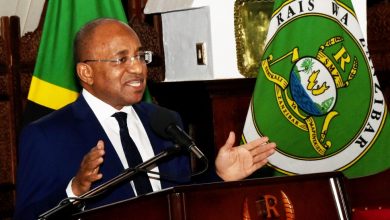
Zanzibar Second Vice-President (2VP), Mr Hemed Suleiman Abdulla, said the government is undertaking far-reaching reforms at the Zanzibar Archives and Records Institution to enhance efficiency, security and professionalism in the preservation of national historical records.
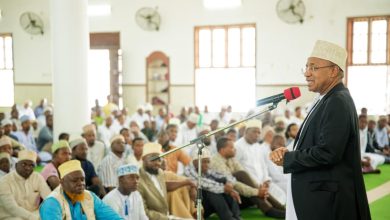
Speaking at Kilimani in Zanzibar while laying the foundation stone for a new archives and records building, Mr Abdulla said the project marks a major milestone in transforming how Zanzibar protects and manages its documentary heritage.
“Once completed, the modern facility will meet both current and long term needs, having been designed with advanced security systems, information and communication technology (ICT), and multipurpose spaces to serve staff and members of the public seeking services,” he said.
Mr Abdulla stressed that the government’s ambition to fully digitise national records can only be achieved through sustained investment in human capital.
He noted that staff at the institution must be equipped with specialised training to produce skilled professionals capable of managing archives in line with national and international standards.
“The government will continue to provide full support and cooperation to ensure Zanzibar is visible on the international map in matters of archives and records, particularly in promoting the island’s rich historical legacy,” he said.
He added that properly preserved archives and records are not only vital for research, planning and policy formulation but can also contribute to national income by serving as a cultural attraction for tourists interested in Zanzibar’s history and heritage.
The 2VP called on employees of the Archives and Records Institution to uphold integrity, professionalism and accountability in safeguarding national documents, assuring them of continued government support to improve their working conditions and institutional efficiency.
He further directed the Zanzibar Buildings Agency (ZBA) to closely supervise the project to ensure that the contractor, ZECCON Company, completes the construction within the agreed timeframe.
He warned that failure to meet the schedule would result in the contractor losing future opportunities to undertake government construction projects.
Meanwhile, Minister of State in the President’s Office, Dr Saada Mkuya Salum, said archives and records are a critical national asset that reflects a country’s development trajectory, a fact that has informed the decision to construct a modern archival facility in Zanzibar.
ALSO READ: Kabudi stresses food security for national development
Dr Mkuya revealed that the President’s Office is at the final stages of completing a National Archives and Records Policy, which will guide all aspects of records management, define staff priorities and transform the institution through digital systems to enhance security and efficiency.
Presenting a technical report on the project, Permanent Secretary in the President’s Office, Mr Saleh Juma Mussa, said the construction of the new archives building is part of the implementation of the CCM Election Manifesto 2025-2030 and President Dr Hussein Ali Mwinyi’s campaign pledges to improve working environments and staff welfare in order to boost performance.
He noted that for many years, the Archives and Records Institution has been grappling with inadequate and unsafe storage facilities, as well as limited office space for staff—challenges that President Mwinyi resolved to address by approving the construction of a modern facility that meets contemporary standards.
Mr Mussa said the five-storey building, being constructed at a cost of more than 8.8bn/-, will meet all national and international requirements for the preservation of state archives and records.
Once completed, it will enable citizens to better understand their country’s history through well-preserved national records.