UHC implementation begins next financial year
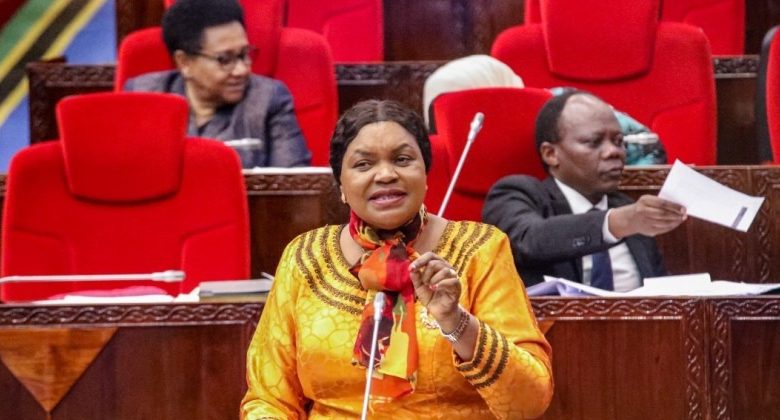
DODOMA: THE government has announced that the implementation of the Universal Health Coverage (UHC) will officially begin in the 2025/2026 financial year, with new packages designed to enable citizens to access health services at all levels of health facilities.
Winding up the budget debate in the National Assembly on Tuesday, Minister for Health Jenista Mhagama said that the current insurance packages in use are not designed for UHC.
“I would like to assure you that we will commence the official implementation of UHC in the upcoming financial year,” she emphatically stated.
The minister added that the goal of UHC is to ensure that every Tanzanian citizen benefits from the investments made by the government. She said the current health insurance packages aren’t designed for UHC.
“We will create new packages tailored for UHC to benefit all citizens. Our goal is to save lives and protect our people.”
Tabling the ministry’s 1.6tri/- budget estimates for the 2025/26 financial year on Monday, Minister Mhagama said that strengthening the health financing systems in the country, including continued implementation of the Universal Health Insurance Act, is among the key priorities of her docket.
She said her ministry has allocated a total of 49.80bn/- for the implementation of various interventions in the coming financial year, including overseeing the implementation of the Universal Health Insurance Act by starting to issue health insurance cards to various groups.
Meanwhile, the minister said that the government is taking measures to ensure the Medical Stores Department (MSD) operates efficiently and fulfills its mandate of supplying essential health commodities across the country.
Minister Mhagama, said that MSD has already received 100 bn/- from its total funding request of 561bn/- submitted last year. She said the government added another 50bn/-, bringing the total support so far to 150bn/-despite its internal efforts and investments to enhance its operational capacity.
Mhagama further said that the government has continued to invest in storage infrastructure by allocating over 42bn/- for the construction of modern warehouses for storing health commodities.
However, she acknowledged that MSD’s operational efficiency has been affected by unpaid debts related to priority health commodities.
To address the challenge, she said, the government has allocated an additional 48.2bn/- specifically for clearing debts associated with the priority health projects.
“This move aims to stabilise MSD and ensure continuity in service delivery,” she said.
ALSO READ: Universal Health Coverage will increase access to health care
The minister also said that the government has also reached out to international partners, including the government of China, where Tanzania is set to receive a grant of 119bn/-, which will further strengthen MSD’s capacity to meet the growing demand for medical supplies.
Ms Mhagama also noted the existence of outstanding debts owed to MSD by the President’s Office Regional Administration and Local Government.
She confirmed that the minister in charge of the docket met with MSD officials to establish a clear repayment framework. Special Seats MP, Regina Qwaray (CCM) noted a rise in Non-Communicable Diseases (NCDs).
She emphasised that despite substantial investments in health infrastructure and equipment, the government should conduct research to understand the causes behind this increase.
She stressed the need for public education on such ailments, noting that in the past, kidney disease was known to affect mainly the elderly, but to date even young children are being diagnosed with the disease.
She urged the government to investigate the quality of food in the country, including vegetables, which are often treated with pesticides.
“It’s possible that some chemicals supplied by dishonest or greedy traders are misused by farmers, who spray them on crops that are then harvested within a week and taken to the market. You end up buying vegetables that still smell of chemicals,” she said.
Kilwa North MP (CCM), Francis Ndulane, advised the government to distribute dialysis equipment to district level health facilities to save kidney patients from having to travel long distances for treatment.
“The cost of treating this disease is very high. I urge the government to develop a programme similar to the one for tuberculosis and cancer, where patients receive free treatment. This service should also be offered free of charge,” he said.
He called on the government to identify a sustainable source of funding to support free treatment for kidney disease.