Tanzania unveils key development priorities for 2025/26

DODOMA: THE government has unveiled five key priorities for the 2025/26 National Development Plan, which marks the fifth and final phase of the Third National Development Plan (2021/22 – 2025/26).
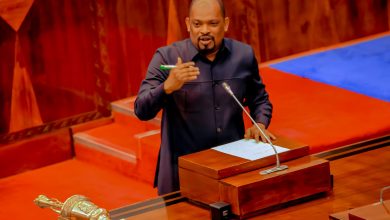
The Minister of State in the President’s Office for Planning and Investment, Prof. Kitila Mkumbo, unveiled the priorities in Parliament in Dodoma while presenting the Government’s Proposed National Development Plan for the Year 2025/26.
Prof. Mkumbo, outlined the focus areas as: promoting a competitive and inclusive economy; enhancing industrial production and service delivery; boosting investment and trade; advancing human development; and fostering skills development.
“These priority areas aim to ensure the continuation of medium-term plans, which will help achieve the National Vision 2025 goal of transforming Tanzania into a middle-income economy with a high standard of living for its people,” he said.
The Minister further emphasized that the primary objective of the 2025/26 National Development Plan is to implement the targets set under the Third National Development Plan to reach the goals of the National Vision 2025.
ALSO READ: Tanzania inks priorities in Health Ministry’s 1.62tri/- budget
“The 2025/26 plan focuses on completing flagship programs and projects, while continuing to invest in sectors with high potential for driving economic growth,” he explained.
He also said, the plan will also prioritize strengthening infrastructure, developing human resources, fostering greater public-private sector cooperation, and increasing investment in research, science, and technology.
Prof. Mkumbo highlighted that the preparation of the 2025/26 plan is guided by the National Vision 2025 and the National Vision 2050 outlook, the Long-Term Development Plan (2011/12 – 2025/26), the Third National Development Plan (2021/22 – 2025/26), the CCM Election Manifesto for 2020 election, the African Union’s Agenda 2063, the UN’s 2030 Agenda for Sustainable Development, the Paris Agreement on Climate Change, and other relevant international and regional agreements.
The Minister also noted that the new plan incorporates insights from ongoing reviews of national development programs, assessments of the National Vision 2025, and responses to global economic, political, social, and environmental changes, including climate change and digital transformation.