Tanzania bets on LNG ahead of deadline
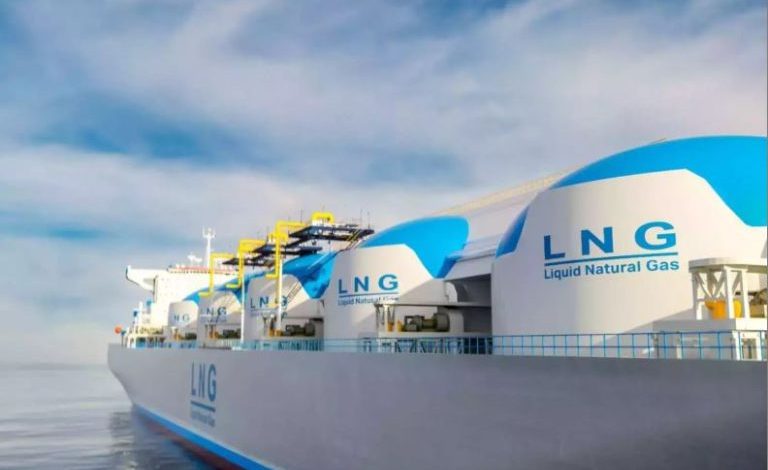
LINDI: IN a global race where capital is chasing shorter-cycle energy returns, Tanzania is sprinting to close a decade-long negotiation on its 42 billion US dollars Liquefied Natural Gas (LNG) project led by Shell (NYSE: SHEL, LSE: SHEL) and Equinor (NYSE/Oslo: EQNR) at Lindi.
The government wants to finalise the Host Government Agreement (HGA) and reach a Final Investment Decision (FID) by end of this year, an ambition first set in 2014.
If achieved, it could generate about 3.5 billion US dollars annually in export receipts, nearly 6 per cent of GDP, estimated by the World Bank at 64 billion US dollars last year.
Yet each year of delay shrinks its competitive edge as investors re-allocate to projects in Mozambique, Namibia and Qatar that are already moving steel. The resource base is indisputable.
According to the Tanzania Petroleum Development Corporation (TPDC), proven recoverable reserves stand near 57 trillion cubic feet (tcf), enough to feed a 10 million-tonnes-perannum (mtpa) plant for over two decades.
The development concept combines offshore fields (Blocks 1, 2 and 4) into a single onshore liquefaction complex.
Industrially the logic is sound: Economies of scale reduce per-unit costs, while shared infrastructure enhances export efficiency.
What remains uncertain is financing depth, fiscal stability and the ability to execute within a tightening global capital cycle. Energy markets now demand speed.
After Europe’s 2022 gas scramble eased, attention shifted back to Asia, where consumption is expected to climb sharply through 2030.
The International Energy Agency (IEA) projects global LNG demand, 412 mt last year—to rise 17–20 per cent by the end of the decade, propelled by China, India and Southeast Asia.
ALSO READ: Optimizing natural gas utilization for socio-economic transformation in East Africa
Brent (ICE: LCOc1) sits around 93 US dollars per barrel, while Asian spot JKM (LNG-AS) averages 11 US dollars per MMBtu, down a quarter yearon-year but still above the 7 US dollars break-even threshold for new plants.
The US Henry Hub (NYMEX: NG=F) remains low near 2.9 US dollars, favouring cheaper American projects.
For Tanzania, locking long-term offtake contracts at 10–11 per cent of Brent is vital to anchor returns before a new supply wave depresses margins.
Across the border, Mozambique stands as both a benchmark and a cautionary tale. Eni (BIT: ENI, NYSE: E) approved Coral North FLNG in 2025, doubling offshore capacity to 7.6 mtpa by 2028, while TotalEnergies (NYSE/Paris: TTE) is preparing to restart its 20 billion US dollars onshore LNG plant by 2029.
Together, these projects could generate 6–8 billion US dollars in annual exports and roughly 2 billion US dollar sin fiscal revenue, underscoring that in this region, execution not potential is the true differentiator.
Tanzania, meanwhile, is still finalising its legal framework and bankability models, even as Namibia’s Venus and Graff discoveries attract over 10 billion US dollars in early-stage oil investment.
With global energy capital increasingly scarce, investors are weighing internal rates of return, not promises on paper.
This makes Tanzania’s policy credibility the decisive variable. The Host Government Agreement must lock in predictable fiscal and arbitration terms for two to three decades to reassure financiers wary of the 2017–2018 resource-control laws that still echo in investor memory.
While recent reforms have signaled pragmatism, only a watertight stabilisation and costrecovery regime can prevent the project’s weighted average cost of capital from breaching 10 per cent, a level that would render Lindi un-bankable even with Brent near 100 US dollars.
Financing Tanzania’s 42 billion US dollars Lindi LNG project requires precision amid tightening global credit conditions.
About 15 billion US dollars is expected from IOC equity, 12 billion US dollars from exportcredit agencies and 10 billion US dollars from syndicated loans or bonds, but the rate climate is hostile: US Treasuries (US10Y: ^TNX) yield 4.35 per cent, African Eurobond spreads average 580 bps, and recent Kenyan and Nigerian issues cleared near 9 per cent.
Every uptick in perceived political or regulatory risk feeds directly into borrowing costs. Tanzania must therefore not only sign the Host Government Agreement but defend it in practice, markets price consistency, not promises.
Even with a 2025 FID, first gas would arrive around 2032, by which time Qatar, the US Gulf and Mozambique will already be shipping cargoes.
Macroeconomic stability, 3.4 per cent inflation, a TZS 2,520/ USD exchange rate and a 3.7 per cent fiscal deficit—remains sound, yet sustaining it through seven years of construction will demand tight policy coordination to prevent external slippage. Yet macroeconomic stability alone does not guarantee political support.
For citizens to feel the benefits, the project must integrate domestic value chains. Gas-to-power plants could halve generation costs from 0.15 US dollars to 0.08 US dollars per kWh, narrowing an 800 MW power deficit and supporting industrial clusters at Mtwara and Lindi.
Gas-based fertiliser and chemical production could absorb roughly 20 per cent of output, while clean-cooking initiatives would reduce energy imports that totaled 2.6 billion US dollars last year according to TRA data.
These domestic linkages turn LNG from a fiscal trophy into a development catalyst and they also help anchor public consensus behind the project.
Corporate strategy remains pivotal as Shell (NYSE: SHEL) and Equinor (NYSE/Oslo: EQNR) weigh Tanzania’s 42 billion US dollars LNG venture against faster, lower-risk opportunities across their global portfolios.
Shell’s post-2025 upstream capex ceiling of 8–9 billion US dollars a year forces tough capital allocation, while Equinor’s exposure in Norway and the US leaves little room for new frontier bets.
Unless Tanzania delivers an investor-grade framework offering real returns above 13 per cent with credible execution guarantees, Lindi will stay a deferred option rather than a boardroom priority.
Yet if it proceeds, the payoff could be transformational, annual construction spending of 8–10 billion US dollars through 2032 would add roughly 1.5 percentage points to GDP growth, lift reserves from 6.9 to 8.5 billion US dollars and compress Eurobond yields by up to 80 basis points, lowering sovereign refinancing costs.
Delay, however, would entrench current-account gaps and keep Tanzania’s Moody’s rating anchored at B1/stable.
Execution now carries geopolitical weight as East Africa positions itself as the continent’s next energy frontier and Tanzania’s ability to deliver the 42 billion US dollars Lindi LNG project will shape its regional credibility.
A timely FID would signal policy maturity, attract capital and align the country with Africa’s industrialisation goals, while delay would reinforce perceptions of bureaucratic inertia.
The global energy transition further raises the bar, investors now assess carbon intensity and governance as closely as returns.
Tanzania must prove both commercial viability and environmental responsibility, integrating carbon-capture and low-flaring standards to access green financing.
Ultimately, Lindi is more than a gas project; it is a test of whether Tanzania can turn reform into execution.
The resources are real, the economics solid, but the outcome will hinge on speed, stability and policy credibility.