SINO-TZ TRADE RELATIONS : Two task forces formed
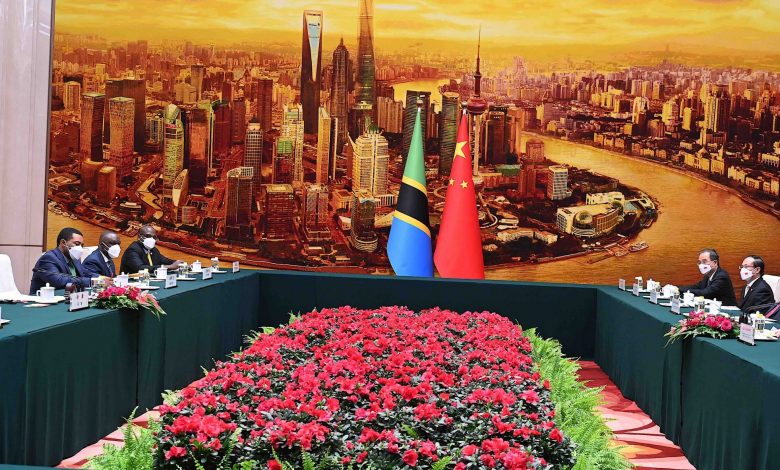
TANZANIA and China have formed two task forces to address bilateral trade and investment issues.
The task forces that will meet three times a year will address issues related to new strategic investment projects as well as challenges related to business and investment.
Tanzanian Ambassador to China Mbelwa Kairuki said that the task forces were formed in response to President Samia Suluhu Hassan’s working visit to China from November 2nd to 4th, this year.
In response to questions from journalists in Dar es Salaam on Saturday, he stated that the task forces were formed in order to create a favourable environment for building and promoting deep strategic cooperation between the two countries in all fields.
“In business, there are issues that require solutions on both sides. For example, there are Tanzanian businessmen who sell their products to China and face several challenges, there will be the first task force specifically designed to deal with such challenges and opportunities,” he explained.
The Directorate of Presidential Communication organised a press conference to brief journalists on President Samia’s working visit to China and the 27th Conference of the Parties to the United Nations Framework Convention on Climate Change (COP27) conference in Egypt.
Ambassador Kairuki further said apart from the avocado market that Tanzania has secured, there are other new markets for products such as vanilla, spices and beef.
According to him, the second task force for investment issues will address the challenges that Chinese investors face in Tanzania, bearing in mind that China is the largest investor in Tanzania.
“The task force will also deal with new strategic projects where it will process them and then send them to higher levels for decision making,” he said.
President Samia and her Chinese counterpart Xi Jinping discussed soybeans export progress during their talks. The two countries signed an agreement in 2020 to allow Tanzanian soybeans enter China market.
“This is a large market in the world; they are the world’s largest importer of soybeans; last year, they imported 97 million tonnes of the produce worth 59 billion US dollars,” Ambassador Kairuki said.
The envoy stated that since the agreement was signed, 103 Tanzanian companies have been registered and are already selling soybeans to China, where they have sold 1,161 tonnes and still the Asian nation demands 1million tonnes.
To increase the quantity of soybeans export to China, Tanzania’s Ministry of Agriculture will sign an agreement with a Chinese Institute through which farmers will receive inputs, quality seeds and a guaranteed market in order to grow the crop to meet the demand of the Chinese market.
“Almost all regions of Tanzania can grow soybeans, but in the first phase, Mbeya, Songwe, Rukwa, Katavi, Njombe, and Iringa will benefit. We believe our sales in the Chinese market will grow to one billion US dollars by 2025,” he noted.
Tanzania and China signed 15 agreements to improve bilateral trade relations, transport and expand the market for agricultural produce during President Samia’s working visit.
On her part, Foreign Affairs and East Africa Cooperation Minister Dr Stergomena Tax said for Tanzania to be able to deliver the required amount of avocados to the second largest economy in the world joint efforts of the government and the private sector are needed.
“In any business, there are three arrows, right quality, quantity and time, so I encourage businesspeople, when they supply their products to these markets, to make sure they abide by that principle,” said Dr Tax.
She added: ‘The government has already done its part to look for opportunities and they have been secured in various places, so it is now the responsibility of the private sector to exploit them. The government is there to help them benefit from the secured opportunities well.”
Minister of State (Union Affairs and Environment), Selemani Jafo said Tanzania has the Carbon Credit Trade guidelines and regulations for fighting climate change, a measure that creates opportunity for Tanzania.
“During the COP27, I had a sideline meeting with the Norway delegation during which it expressed commitment to continue helping Tanzania with various climate mitigation projects, especially those focusing on agriculture, energy and research,” he said.
At COP27, President Samia and other Southern African Development Community leaders agreed to focus on three issues to improve electricity generation and distribution in the region.
The leaders agreed in principle to use the renewable energy compact as an investment package for increasing electricity access in the region.