OTR, CAG to collaborate in overseeing public corporations
COAST REGION: AS part of efforts to achieve ongoing reforms in public institutions, the Office of the Treasury Registrar and the National Audit Office of Tanzania have agreed to collaborate in eight areas.
These will include good governance, effective implementation of audit recommendations, practically living the R4 philosophy of President Samia Suluhu Hassan in improving management and leadership systems, effective management of public resources and financial accountability.
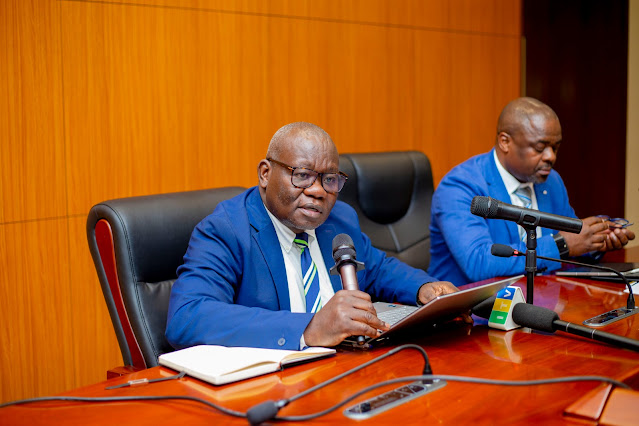
Additionally, in a meeting led by Treasury Registrar Mr Nehemiah Mchechu, alongside the Controller and Auditor General Mr Charles Kichere, both parties discussed the need for public institutions to embrace the use of Information, Communication and Technology (ICT) and training for employees.
This agreement was reached during a two-day working meeting that began on Tuesday, February 25, 2025, at the Mwalimu Julius Nyerere Leadership School in Kibaha-Coast Region.
Speaking to reporters yesterday, February 26, 2025, in Coast Region, Treasury Registrar Mr Nehemiah Mchechu stated that for the government to succeed in the reforms, it is undertaking in public institutions, adding that the issue of good governance is unavoidable.
“We must improve good governance and that is why we have seen the need to collaborate with the National Audit Office, which has a major role in ensuring good governance in public institutions,” said Mr Mchechu.
“Together, we have agreed to enhance the working relationship between these two government institutions. In this regard, we have identified the need for regular interaction between the management of these two offices.”
By doing so, Mr Mchechu said the efficiency of public institutions would increase, thus enhancing their contributions to the government’s Consolidated Fund.
“There is already good productivity, but our desire is to see these public institutions enhance creativity and efficiency so that we achieve positive outcomes from the investments made by the government,” he pointed out.
According to the Office of the Treasury Registrar, as of June 30, 2024, the government had invested 86.3tri/- in 308 institutions it oversees, including those in which it holds minority shares.
This amount represents a 14.2 per cent increase compared to 75.6tri/-, the amount invested by 2023.
The government’s goal is to ensure that the nation and Tanzanians as a whole benefit from this investment, which is why, alongside increasing investment, several measures are being taken, including granting commercial and strategic institutions the autonomy to manage themselves.
“We closely monitor the performance of public institutions and those that meet the criteria will be granted more autonomy,” said Mr Mchechu.
ALSO READ: Over 73tri/- invested in public corporations
Among the criteria is the ability to operate using the institution’s own revenue without relying on government grants, contributing non-tax revenue to the government’s main treasury fund at a level set by the Treasury Registrar and the ability to operate commercially and compete both domestically and internationally.
Other criteria include the sensitivity of the services provided and contributing to national security and welfare; offering services that impact multiple sectors of the economy (multiplier effect), along with the institution’s contribution to economic, political, social and security matters.
For his part, Mr Kichere stated that the meeting between his office and that of the Treasury Registrar was fruitful as they discussed important issues affecting national interests.
“We discussed improving financial accountability and implementing various resolutions aimed at ensuring public funds are used efficiently, transparently, and in accordance with good governance principles,” said Mr Kichere.
Moreover, in the meeting of the two offices, they agreed to collaborate on ensuring public institutions implement audit recommendations.
“In this regard, the Treasury Registrar alone cannot handle this, nor can the Controller and Auditor General, which is why we have seen the need to speak a common language,” said Mr Kichere.
Also, on the agenda of cooperation is the best way to ensure public institutions effectively manage public resources to operate efficiently and thereby reduce dependency on the central government.
“We want to see public institutions reduce their dependence and instead be at the forefront of strengthening the government’s Consolidated Fund,” said Mr Kichere.
In this context, we agreed to practically implement and live the R4 philosophy of President Samia to achieve the intended goals.
This philosophy focuses on Reconciliation, Resilience, Reforms and Rebuilding the Nation.
“We have agreed on the best way to collaborate in implementing the R4 philosophy with the aim of enhancing efficiency in managing the performance of public institutions,” said Mr Kichere.
To increase efficiency, Mr Kichere also mentioned that his office and that of the Treasury Registrar agreed to create an environment for public institutions to embrace the use of ICT along with training for employees.
“We must empower employees of public institutions and we must also embrace the use of ICT if we want to increase efficiency,” he said.
Mr Kichere added: “We are ready to continue exchanging ideas and experiences with the Office of the Treasury Registrar to help the government achieve its goals of improving public institutions.”