Mpango calls for PPP to boost industrial sector
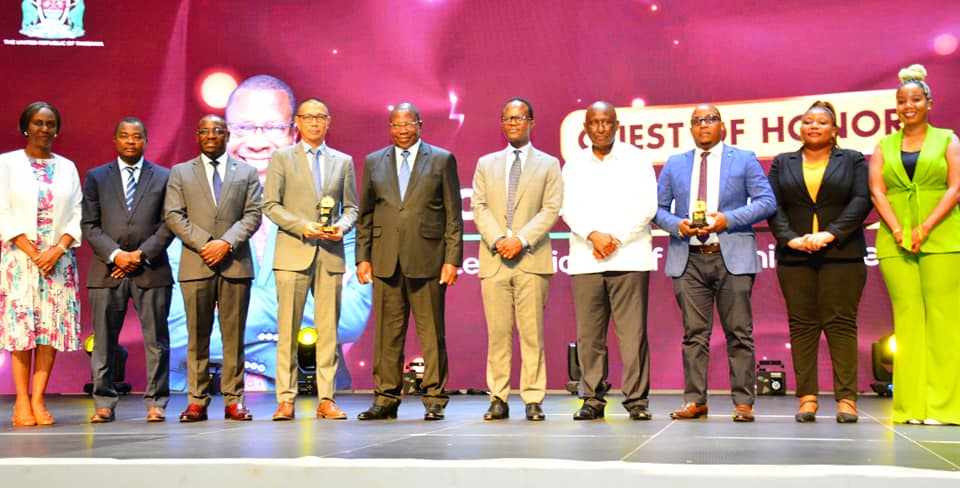
DAR ES SALAAM: VICE-PRESIDENT Dr Philip Mpango has insisted on the importance of collaboration between the government and private sector in addressing challenges and unlock the full potential of Tanzania’s industrial sector so as to boost the country’s economic growth and create jobs.
Dr Mpango said that while the industrial sector is widely recognised as the foundation of rapid development in many countries, Tanzania’s industrial sector has contributed only eight per cent to the country’s Gross Domestic Product (GDP) over the past decade, which he described as very low.
The VP was speaking during the 18th President’s Manufacturers of the Year Awards (PMAYA), organised by the Confederation of Tanzania Industries (CTI).
“Despite the great potential of the industrial sector to contribute more to the national economy, its contribution here in Tanzania remains quite small, accounting for only 8.1 per cent of GDP in 2023,” said Vice-President Mpango.
He further pointed out that the industrial sector also holds significant potential for job creation, contributing 12.1 per cent of formal employment in the country.
Addressing the challenges facing the sector, Dr Mpango identified several key obstacles, including difficulties in accessing affordable capital, shortage of skilled human resources, inadequate research and development, outdated and low productivity technologies, insufficient infrastructure, particularly in energy and transportation and non-tariff barriers.
However, Dr Mpango highlighted positive trends, noting that revenue from industrial exports has increased from 0.9 billion US dollar (about 2.4 tri/-) in 2020 to 1.4 billion US dollar (about 3.7tri/-) in 2023.
“I am confident that this sector can generate even more revenue,” he added.
The VP explained that there is need for local manufacturers and the private sector to capitalise on the country’s large youth workforce.
“I suggest, among other things, that you offer young people opportunities for practical training through internships and field attachments to help them build their skills. The industrial sector has the potential to provide various opportunities for our youth,” he said.
Dr Mpango drew attention to the problem of uncontrolled imports of industrial goods. “For example, in 2023/24, government agencies destroyed goods worth 9bn/- due to quality issues.
Those included food products worth 4.7bn/-, cosmetics valued at 1.6bn/-, second-hand under-wears worth 30.4m/-, construction materials such as roofing sheets and cement valued at 2.3 bn/- and chemicals worth 468.2m/-,” he said. He added: “I urge you to increase production to meet local demand and support the government’s efforts to control low-quality imports.”
The VP also called on the Confederation of Tanzania Industries (CTI) to develop strategies to boost the industrial sector’s contribution to foreign revenue and to take further action to improve the sector’s performance.
Meanwhile, Deputy Minister for Industry and Trade, Mr Exaud Kigahe, commended CTI for organising the function, saying the awards are cornerstone in celebrating the success of local industries.
“The government is also continuing to designate areas for industrial development across the country, with instructions given to all districts and regions to prioritise this,” he said.
CTI Chairman, Mr Paul Makanza, expressed gratitude to the government for its responsiveness in addressing the challenges that face industrialists. He listed some of the key issues that had been resolved as electricity shortage, foreign currency challenges and tax issues.
The overall winners of the award were Tanzania Cigarette Company Limited (TCC), followed by Plascon and ALAF. Also, Tobacco company Alliance One has scooped the top prize in the President’s Awards for the best producers.