Misinformation, hate speech threaten peace, tranquillity and national cohesion
DAR ES SALAAM: IN everyday life, there are elements that, whether stemming from a lack of understanding or a state of unawareness, have not received the requisite attention to the significance of peace and its advantages for both individuals and society at large.
The need to make decisions grounded in credible information from trustworthy sources is sometimes overlooked.
Consequently, particularly during the electoral period and its aftermath, it is prudent to avoid decisions influenced by misinformation or by sources that could undermine the nation’s peace and national security.
Within our economic regional bloc, the attributes of peace and tranquility stand out as among Tanzania’s most esteemed national assets.
For many years, the nation has garnered respect for its notable stability, social unity and capacity to navigate political transitions without spiraling into extensive violence.
Those born after the year 2000, a.k.a Gen Z, need to be aware that this tranquility did not arise by mere chance; it is the product of intentional nation-building initiatives, robust cultural principles, an appreciation for diversity and a shared dedication to cohesion well built by the founding father of this nation, Mwalimu Julius Nyerere.
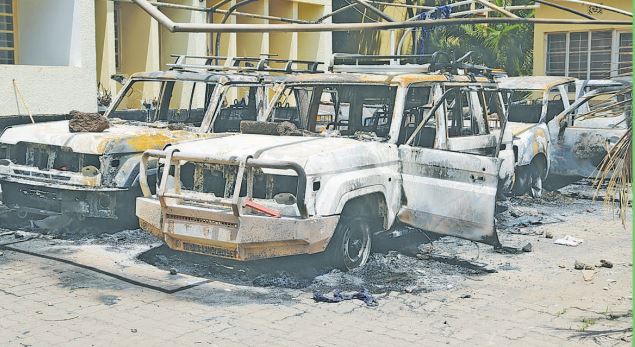
But in the contemporary landscape characterised by multiparty democracy, digital communication and fiercely contested elections, as exemplified by Tanzania, this hard-won tranquility faces novel and complex challenges foremost among them are misinformation and hate speech that have nearly torn our nation apart.
It is an undisputable fact that during and after general elections, emotions often run high. Political competition intensifies, public debate becomes sharper and citizens are more exposed to unverified information.
In such an environment, misinformation and hate speech can spread rapidly, undermining trust, inflaming divisions and disturbing peace and tranquility that have been built over generations.
For those unfamiliar, misinformation is false or misleading information shared without proper verification, whether intentionally or unintentionally.
Likewise, hate speech is communication that attacks or demeans individuals or groups based on attributes that aren’t grounded in social identity.
While these two phenomena are distinct, they often overlap and reinforce each other, particularly during politically charged periods such as elections.
In Tanzania, where communities are diverse yet closely interconnected, the spread of false narratives or inflammatory language can have farreaching consequences.
What begins as a misleading social media post or a provocative political statement can quickly escalate into suspicion, fear, or hostility between communities.
When misinformation is injected into this process, it distorts public understanding, undermines informed decision-making and threatens peace and unity.
Without responsible communication, these narratives can deepen mistrust of democratic institutions and provoke unrest.
Amidst all the issues related to misinformation and sometimes hate speech, one of the most significant changes in recent years has been the role of social media and digital communication.
Platforms such as WhatsApp, Facebook, X (formerly Twitter) and TikTok allow information to spread instantly, often without verification.
While these platforms have expanded access to information and civic engagement, they have also made it easier for misinformation and hate speech to go viral.
In Tanzania, where mobile phone penetration is high, a single misleading message can reach thousands within minutes.
Statistics from the reliable TCRA show that in January 2024 there were 67.72 million mobile connections, equivalent to 99.0 per cent of the total population.
In March 2025, mobile subscriptions reached 90.4 million, resulting in a penetration rate of approximately 133.9 per cent (based on an estimated population of 67.5 million at the time).
By June 2025, subscriptions had increased to 92.7 million and in September 2025 to 99.3 million, with a penetration rate of 139 per cent.
Forwarded messages, voice notes, edited videos, or fabricated images are often shared among trusted networks, giving them credibility even when they are false.
This rapid spread makes it difficult to contain harmful narratives once they gain momentum. But a question might arise: How does this undermine peace?
I don’t know what others might think, but in my view, misinformation is dangerous because it distorts reality.
When citizens base their opinions and actions on false information, rational dialogue becomes difficult.
ALSO READ: Samia sets out a case for stability, reform and national cohesion
During elections, misinformation can create the perception that certain groups are being targeted, excluded, or cheated. Even when untrue, these perceptions can provoke anger and fear.
For example, rumours that security forces favour one political side, or false claims of planned violence by supporters of another party, can cause panic and preemptive hostility.
Communities may become suspicious of each other, disrupting everyday interactions and economic activities. In extreme cases, misinformation can trigger protests or confrontations that threaten public order.
In this environment, hate speech is particularly dangerous because it dehumanises.
By labelling others as enemies, traitors, outsiders, thieves, or any other terms the preacher might use, it erodes empathy and normalises hostility.
In a country like Tanzania, which has long promoted unity across 120 ethnic groups, religions and regions, hate speech strikes at the core of national identity.
During elections, political rhetoric can sometimes cross the line from criticism of policies to attacks on identity.
When political competition is framed as a struggle between “us” and “them,” society becomes polarised.
Such polarisation does not end with the election; it lingers, weakening social bonds and making reconciliation more difficult.
Given that young people, both men and women are often the most active users of digital platforms and, therefore, the most exposed to misinformation and hate speech, without adequate media literacy, youth may unknowingly share false or inflammatory content(s).
At the same time, they are often targeted by political actors seeking to mobilise or manipulate them for several reasons. For instance, misinformation and hate speech erode trust in institutions essential to maintaining peace.
Electoral bodies, courts, security agencies and the media may be portrayed as illegitimate or biased through the propagation of unnecessary false narratives.
When citizens lose confidence in these institutions, they are less likely to accept election outcomes or resolve disputes peacefully.
In Tanzania, where institutional stability has been a key factor in maintaining peace, protecting public trust is vital for one good reason.
Undermining institutions through misinformation creates a vacuum that rumours, speculation and confrontation can fill. Many do not realise that, as an economist, peace and tranquility are prerequisites for economic development.
When misinformation and hate speech create instability, the financial consequences are immediate. Businesses may delay investment, tourism may decline and communities may experience disruptions to trade and services.
Moreover, development projects require cooperation across political and social lines. Polarisation makes collective action more difficult, slowing progress and deepening inequality.
In this way, misinformation and hate speech not only threaten peace; they also undermine long-term development goals.
Thus, responsible leadership is critical in countering misinformation and hate speech.
Political leaders, opinion makers and public officials must set an example by using respectful language, correcting false information and discouraging inflammatory rhetoric among their supporters.
Silence or ambiguity from leaders can be interpreted as endorsement of harmful behaviour.
The media also plays a crucial role. Ethical journalism that prioritises accuracy, context and balance can counter false narratives and promote informed debate.
Community media, in particular, can help address local concerns and clarify misunderstandings before they escalate.
And my plea to all Tanzanians is that preventing the spread of misinformation and hate speech is not solely the responsibility of authorities or institutions. Citizens have a role to play.
Verifying information before sharing, questioning sensational claims and engaging respectfully with differing opinions are essential habits in a democratic society.
Promoting media literacy, especially among youth can empower citizens to distinguish credible information from falsehoods.
Education systems, civil society organisations and community leaders can all contribute to building a culture of responsible communication.
Tanzania’s peace and tranquility are the result of decades of unity, tolerance and collective responsibility.
Misinformation and hate speech threaten to unravel this legacy, particularly during and after general elections, when emotions and stakes are high.
Left unchecked, they can distort democracy, divide communities and destabilise the nation.
Ensuring the preservation of peace requires vigilance, principled leadership, an accountable media and an educated populace.
By dismissing misinformation, denouncing hate speech and fostering respectful dialogue, Tanzanians can ensure that political competition enhances, rather than diminishes, national unity.
Harmony is sustained not merely through legislation, but through the conscious decisions individuals make in their interactions, the way they address challenges, the dissemination of knowledge and the respect they show one another. Safeguarding peace and unity are collective responsibilities.