

Early humans relied on simple stone tools in a changing East African landscape
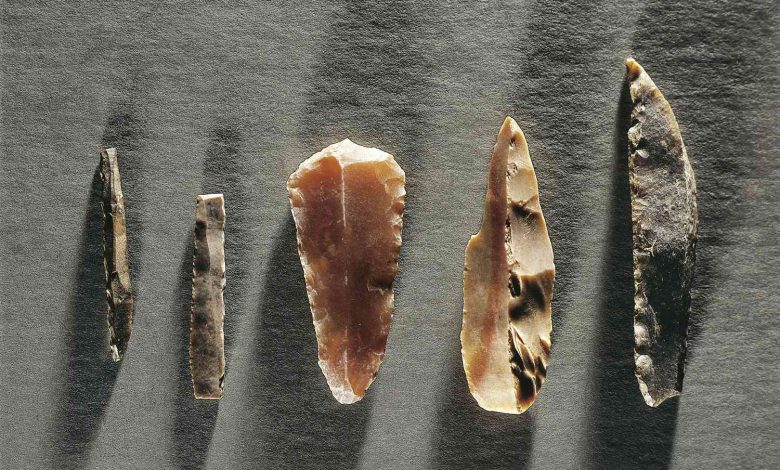
DAR ES SALAAM: OUR prehistoric human ancestors relied on deliberately modified and sharpened stone tools as early as 3.3 million years ago. The selection of rock type depended on how easily the material could be flaked to the desired shape and form.
The resulting product proved invaluable for everyday tasks. Sharp-edged rock fragments were manufactured to suit various needs, including hunting and food processing.
The Stone Age period lasted from about 3.3 million years ago until the emergence of metalworking technologies. Throughout this time, diverse tool-making traditions flourished. Among them is the Oldowan tradition, one of the earliest technological systems created by our early ancestors.
The tools are not shaped to have “fancy looks”. Still, they represent a huge step in human evolution. They show that our ancestors had begun modifying nature intentionally, creating tools with a purpose rather than just relying on naturally sharp stones.
Evidence from Homa Peninsula on the Kenyan side of Lake Victoria and Koobi Fora, Kenya’s Lake Turkana, places the origins of the Oldowan between 2.6 million and 2.9 million years ago at these sites. For nearly a million years, this technology stayed within Africa, becoming a key part of how early humans survived.
Over time, the knowledge of how to produce and use stone tools spread. By about 2 million years ago, Oldowan toolmaking had spread across north Africa and southern Africa. It eventually extended into Europe and Asia as our ancestors expanded their geographic range.
Although these tools appear basic, their manufacture required skill, planning, and a thorough understanding of stone fracture mechanics. Hominins made sharp flakes by striking rocks against other rocks to break them. The resulting sharp edges could then be used for butchering animals, processing plants, and breaking bones for marrow.
Until recently, the oldest known evidence of tool use found on the eastern shore of Lake Turkana, in Kenya, was dated to around 2 million years ago. The region is one of the world’s richest areas for early human fossils and archaeological remains, yet it lacked a secure, long-term sequence of early Oldowan occupation.
That picture has now changed dramatically. We are researchers who study ancient life and landscapes, and we have now documented some of the oldest evidence yet of Oldowan tools. They are 2.75 million years old and come from East Turkana, at a site called Namorotukunan in Kenya. They are nearly 700,000 years older than other Oldowan sites from this part of Lake Turkana (and older than Oldowan tools from the Afar, Ethiopia, by about 150,000 years). At this site, there were three distinct archaeological horizons (layers of sediment that record separate events of tool making activities), spanning 300,000 years.
But throughout this long period, during which the climate and landscape changed, our hominin ancestors continued to make and use the same kind of tools.




i enjoy reading your articles, it is simply amazing, you are doing great work, do you post often? i will be checking you out again for your next post. you can check out webdesignagenturnürnberg.de the best webdesign agency in nuremberg Germany