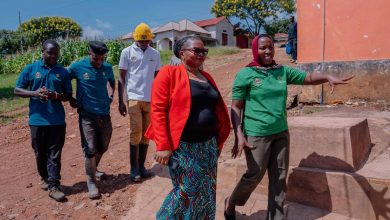
EACOP project set for July completion

TANGA: THE East African Crude Oil Pipeline (EACOP) is on track for commissioning by July 2026, with construction reaching a critical 79 per cent completion milestone.
Minister for Energy, Deogratius Ndejembi announced the updated figures of the 5 billion US dollars project on Monday during a highlevel briefing accompanying a visiting Ugandan delegation.
The remaining 21 per cent of the works, primarily focused on final system integrations and terminal completion, are currently under active implementation across both borders.
“Once completed, the project is expected to drive major economic growth, especially in Tanzania, where a large part of the project passes. The Uganda oil exploration and production will play a pivotal role in the country’s economic transformation,” said Ndejembi.
He said the project is anticipated to generate substantial employment opportunities. According to Minister Ndejembi, over 120,000 jobs were created, offering new skills and employment for many in Uganda and the surrounding region.
He also emphasised that the project’s next phase would depend heavily on Uganda’s preparedness and that it will also have the capacity to transport 246,000 barrels per day once it starts operating.
The Minister for Energy and Mineral Development from Uganda, Dr Ruth Nankabirwa shared her insights on the EACOP project, a key initiative designed to drive significant job creation and economic growth across East Africa. Dr Nankabirwa, said the infrastructure is central to Uganda’s “Vision 2040,” which aims to grow the national economy from 40 billion US dollars to 500 billion US dollars.
ALSO READ: Access to capital drives development journey
Dr Nankabirwa said the oil transportation sector, in particular, is expected to be a key contributor to this transformation, with transportation costs projected at 12.77 US dollar per barrel.
This infrastructure will benefit not only Uganda but also neighbouring Tanzania, as both nations will benefit from improved oil transportation systems, fostering regional economic integration.
Beyond immediate economic benefits, she said the project’s long-term effects are expected to extend far beyond Uganda’s borders. As oil exploration and extraction increase, the initiative will create employment opportunities in both Uganda and Tanzania.
The shared infrastructure, along with workforce development programmes, will ensure that citizens from both countries are trained and equipped with advanced skills in energy, transportation and other related industries.
Moreover, she said a crucial element of this development is the emphasis on national technology transfer. As part of the EACOP project, workers in Uganda and Tanzania received specialised training in oil exploration, transportation and refinery technologies.
She said this investment in human capital will not only benefit the two countries but will also position them as regional leaders, capable of undertaking major energy projects on a global scale.
“There is a need for all people employed to implement strategic projects like this to have a special system for identifying them, so that when other projects arise they can be given opportunities based on their experience and integrity in work performance,” Dr Nankabirwa said.
Additionally, the Minister emphasised the importance of discipline and hard work among workers involved in these projects. She assured that those involved in the current initiatives would have opportunities for future roles as the energy sector continues to expand.
The project will foster local talent and prepare both nations for leadership roles in the global energy market. She said the collaboration between two countries will serve as a model for regional cooperation, driving economic growth and positioning the two nations as influential players in the global energy market.
The crude oil pipeline project which began in 2016 from Hoima in Uganda to Chongoleani in the Tanga region has a length of 1,443 kilometres, of which 296 kilometres are in Uganda and 1,147 kilometres are in Tanzania. On the Tanzanian side, there are a total of four pumping stations, while Uganda has two, making a total of six pumping stations.