

COLUMN: NEW THINKING. Is GDP per capita enough to measure well-being?
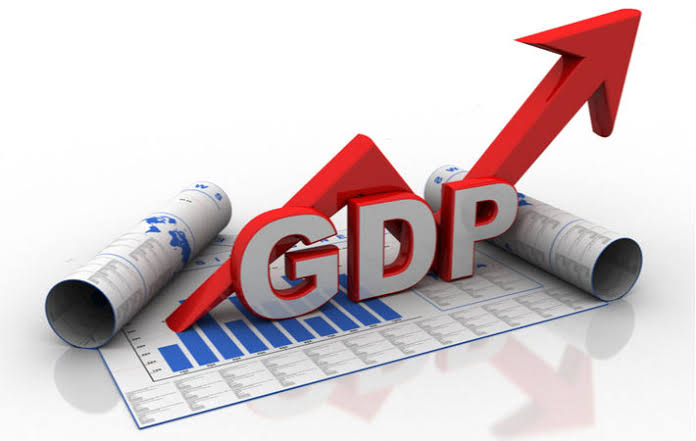
DR Akinwunmi Adesina, outgoing President of the African Development Bank (AfDB), recently raised concerns about Nigeria’s economic trajectory, highlighting a stark decline in GDP per capita from 1,847 US dollars in 1960 to a projected 824 US dollars in 2025.
This suggests a significant erosion of economic well-being since independence. This observation calls for a critical reassessment of how economic growth is measured in relation to citizens’ lived realities.
While acknowledging Dr Adesina’s expertise and leadership, it is important to understand that GDP per capita alone does not fully capture improvements in living conditions.
Many economists agree that relying solely on GDP provides a narrow view of a nation’s overall well-being. The key question is not merely about the data but whether GDP per capita is an adequate metric to evaluate living standards.
More importantly, what alternative measures might better capture citizens’ realities and broader notions of well-being? To explore this, it helps to first understand what GDP per capita actually represents. As explained in the 2019 book The Veil of Economics: A Guide for Non-Economists, GDP (Gross Domestic Product) measures the monetary value of all goods and services produced within a nation’s borders, reflecting the size and scale of its economy.
ALSO READ: GUEST COLUMNIST: Biogas and beyond: Can Tanzania lead in off-grid solutions?
GDP per capita divides this figure by the total population, much like dividing a household’s total income among all its members. Population size plays a significant role in determining GDP per capita.
When a country’s population grows faster than its economy, per capita income falls, which can suggest economic hardship for many citizens. This is especially true in countries with large, rapidly growing populations. However, GDP has critical limitations.
It measures only activities involving market transactions with a clear monetary value. For example, when you hire someone to clean your home and pay them, this work contributes to GDP.
But if a family member cleans your home without payment, that valuable effort is not counted in GDP calculations, despite its real contribution to household well-being. Critics also argue that GDP per capita masks income inequality and does not reveal how wealth is distributed among citizens.
For example, the East African Community (EAC)—including Tanzania, Uganda, Ethiopia, and Rwanda—is experiencing strong economic growth, with GDP per capita projected to reach about 941 US dollars by 2025.
Over the decade before 2018, the region’s per capita income doubled. Despite these impressive numbers, wealth disparities and other social challenges persist. Despite its shortcomings, GDP remains the primary quantitative measure of national wealth and well-being globally, largely due to the absence of a widely accepted alternative.
Simon Kuznets, who pioneered GDP measurement in the 1940s, described economic growth as “a rising tide that lifts all boats,” linking GDP growth to increased prosperity among populations. More recently, Professor David Susskind noted in his book Growth: A Reckoning that GDP correlates strongly with many measures of human flourishing. Indeed, rapid economic growth is often the most effective way to reduce poverty, create jobs, and improve living standards.
However, many people without an economics background might overlook how GDP per capita provides useful, though incomplete, insights into a country’s economic progress. Consider Nigeria, with a population nearing 225 million. To support such a large population adequately, the economy must grow at an annual rate of around 8.0 per cent, which is a formidable challenge.
This example illustrates the complex interplay between population growth and economic output necessary to improve living standards. GDP itself is composed of four main components: household consumption, business investment, government spending, and net exports. In many developing countries, consumer spending remains limited due to low disposable incomes, which dampens business investment.
Government spending often financed by borrowing frequently becomes the primary growth driver. However, this reliance on government expenditure raises questions about its effectiveness in boosting productivity or improving citizens’ financial well-being.
It is also important to recognise that economic prosperity does not necessarily translate into happiness. Countries like Bhutan, with relatively low GDP per capita, rank among the happiest nations in the world.
The World Happiness Report evaluates countries based on multiple factors beyond income: social support, healthy life expectancy, freedom to make life choices, generosity, and perceptions of corruption.
These dimensions significantly shape overall life satisfaction and well-being. According to the World Happiness Report, East African Community (EAC) countries generally rank low in global happiness standings.
Kenya is ranked 115th out of 147 countries, with a life evaluation score of around 4.5 out of 10, while Uganda holds the same rank with a slightly lower score of 4.4.
Tanzania ranks 136th with an average score of approximately 3.8. Rwanda and Burundi consistently appear among the lowest-ranked countries. In the 2021 report, Rwanda scored 3.27, below its 2013– 2021 average of 3.45.
Burundi scored 3.78 in 2020, slightly above its 2013–2020 average of 3.27, but had a low point of just 2.9 in 2017. These rankings highlight persistent challenges across income, health, social support, freedom, generosity, and trust in institutions all factors that impact financial stability, social cohesion, personal freedom, and confidence in governance.
Dr Adesina’s remarks echo this broader understanding: human well-being depends on various factors beyond GDP per capita. While GDP remains a vital economic indicator, a fuller picture of progress and prosperity must include diverse social and psychological dimensions.



251575 939772This really is a right blog for would like to find out about this topic. You realize a lot its almost challenging to argue along (not that I personally would wantHaHa). You really put the latest spin with a subject thats been discussed for a long time. Fantastic stuff, just fantastic! 780951