BoT holds policy rate at 5.75pc
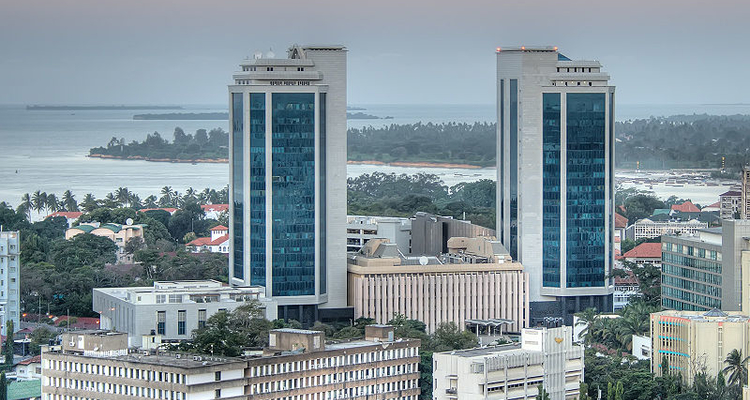
DAR ES SALAAM: THE Bank of Tanzania (BoT) maintained its central bank rate (CBR) at 5.75 per cent for the first quarter of 2026, marking the third consecutive hold, thanks to stable inflation and robust growth.
The BoT Governor, Emmanuel Tutuba, said in Dar es Salaam yesterday the decision to keep hold of the rate followed Wednesday’s meeting of the Monetary Policy Committee (MPC) and is intended to support robust domestic expansion amid cooling global headwinds.
“The decision was taken considering that inflation is projected to remain within the target range of 3 to 5 per cent and the monetary policy committee expects economic conditions to be favourable and therefore, keeping the rate unchanged would support robust economic growth,” he said.
Inflation has remained subdued at around three per cent over the past two years, bolstered by prudent monetary policy, moderated food prices and a resilient global economy despite rising trade tariffs.
Real gross domestic product (GDP) continues to track favourably against projections, supported by increased public infrastructure investment alongside strong performance in agriculture and mining.
Economic growth for 2025 is estimated at 5.9 per cent, broadly in line with the annual projection of six per cent.
The MPC noted that growth was driven mainly by agriculture, mining and construction.
In Zanzibar, the economy is estimated to have expanded by 6.8 per cent in 2025, supported by construction, tourism and manufacturing activities.
For the first quarter of 2026, growth in Mainland Tanzania is projected to remain strong at six per cent, while the Zanzibar economy is forecast to grow by 7.2 per cent.
Inflation remained low and within the target range during the fourth quarter of 2025. In Mainland Tanzania, inflation averaged 3.5 per cent, while Zanzibar recorded 3.4 per cent.
Mr Tutuba attributed this to prudent monetary policy and favourable global conditions, which helped stabilise the exchange rate and reduce imported inflation.
The MPC expects inflation to remain within the three to five per cent target range throughout 2026.
In line with the inflation and growth outlook, the BoT will continue to implement monetary policy to ensure that the seven-day interbank rate evolves within the band of 3.75 to 7.75 per cent, the governor said.
The banking sector remained sound, with adequate liquidity to support lending and sufficient capital buffers to withstand potential shocks.
ALSO READ: BoT auctions 15m US dollars to stabilise the forex market
The loan portfolio expanded in 2025, reflecting a favourable business environment. Credit risk remained low, with the non-performing loan ratio at 3.1 per cent, comfortably below the regulatory threshold of five per cent.
Payment systems also remained resilient, operating efficiently and smoothly. Credit to the private sector expanded strongly by 20.3 per cent in 2025.
Mr Tutuba said the external sector improved significantly, with the current account deficit narrowing to a five-year low of 2.2 per cent of GDP in 2025.
This was driven by stronger exports of gold, agricultural products, tourism and transport services, alongside a decline in global oil prices. Zanzibar sustained a current account surplus in 2025, supported mainly by tourism.
Foreign currency liquidity remained adequate in the fourth quarter of 2025, boosted by exports of cashew nuts and gold, as well as tourism receipts.
As a result, the Tanzanian shilling remained stable against the US dollar, recording a slight appreciation of about 0.8 per cent by the end of the quarter.
Foreign exchange reserves stood at more than 6.3 billion US dollars, sufficient to cover about 4.9 months of imports, in line with the minimum requirement of four months.
The reserves are expected to remain adequate in the first quarter of 2026, supported by strong export performance and moderate oil prices.
Fiscal performance was deemed satisfactory, with improving tax revenues in both Mainland Tanzania and Zanzibar.
While public debt increased moderately, it remains sustainable with a ‘moderate risk’ of distress.
According to the 2024/25 Debt Sustainability Analysis, the ratio of public debt to GDP (in net present value terms) declined to 40.6 from 41.1 per cent the previous year, remaining well below the 55 per cent maximum threshold.