

Dar port’s quiet revolution: Tanzania’s boldest play yet for trade dominance in Africa
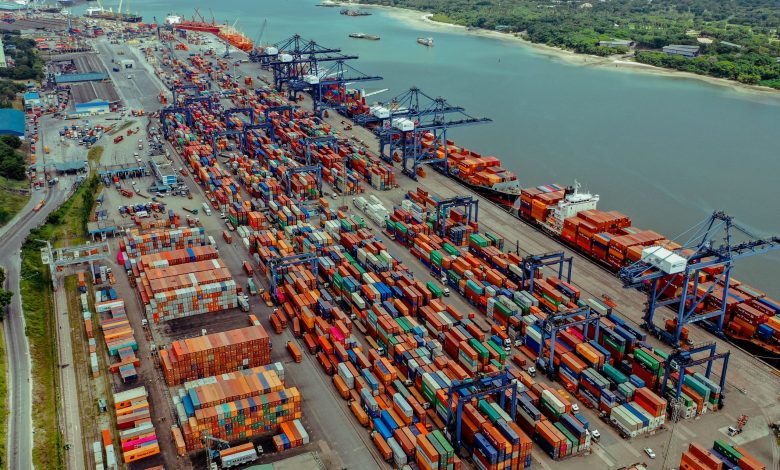
For decades, the Port of Dar es Salaam was a cautionary tale—a bottleneck of delays, stifled by excessive bureaucracy, and generally avoided by serious traders unless absolutely necessary.
Ships idled offshore for weeks, and exporters had to meticulously plan far in advance just to contend with the pervasive inefficiencies.
While Dar es Salaam was never entirely off the global trade route map, it was certainly not the preferred stop.
The New era: Smarter, faster, more Strategic
Today, the Port of Dar es Salaam is not just moving faster. It is moving smarter. It is rapidly transforming into a pivotal anchor point in Tanzania’s ambitious vision: to become the undisputed preferred gateway to East and Central Africa. This new Dar is leaner, digitally integrated, and earning international trust. The world is undeniably watching.
A testament to this radical shift is the arrival of global metals trading giants like China Metal Storage and Transport Company (CMST) and Henry Bath & Sons Ltd.
These firms, collectively managing hundreds of billions of dollars in commodities annually, have strategically chosen Dar es Salaam as their primary gateway.
Their willingness to invest significantly in Tanzania as their entry point to the vital copper belt, solidified by their new partnership with DP World, sends a loud and clear message: Dar es Salaam Port is a strategic asset of immense global importance.
This profound transformation is no accident. It’s the direct result of deliberate, often difficult, reforms. The Tanzania Ports Authority (TPA), under the resolute leadership of President Samia Suluhu Hassan, made bold choices.
These included bringing in a world-class operator to manage port terminals, spearheading the Dar es Salaam Maritime Gateway Project (DMGP), rolling out the Tanzania Electronic Single Window System (TeSWS), and overseeing the Tanzania Revenue Authority’s upgrade to the fifth generation of the Tanzania Customs Integrated System (TANCIS).
While these decisions were not always universally popular, they have unequivocally delivered the desired results.
“Under the capable leadership of Her Excellency President Samia Suluhu Hassan, Tanzania is reinvigorating its role in the global economy by strengthening trade infrastructure and improving port performance,” said Plasduce Mbosa, Director General of the Tanzania Ports Authority, at the MOU Signing Ceremony between CMST-DP WORLD & HENRY BATH.
“We are proud that TPA, through Dar es Salaam Port, is playing a growing role in shaping the future of trade—not just for Tanzania, but for Africa and the world. We look forward to continued collaboration with DP World and all our partners in creating stronger trade corridors and a more connected global economy.”
Tangible results: Speed, efficiency, and economic growth
The quantitative improvements are staggering:
*Container vessel waiting time—once a debilitating 30 days—has plummeted to near zero.
*Turnaround time for vessels has dramatically fallen from 10 days to a mere 36-48 hours.
*Port operating costs have been slashed by half, while cargo throughput has surged exponentially.
Terminal 1 alone is now handling over 20,000 TEUs (Twenty-foot Equivalent Units) per month—nearly triple its previous average. Pure Car Carrier ships now berth almost upon arrival, and considerable reductions in vessel waiting times have been observed for dry bulk commodities like wheat, sulfur, fertilizer, and clinker, all of which have seen significant volume increases. In essence, the port is finally operating at the speed of modern business.
The impact on Tanzania’s economy is profound and immediate. The Tanzania Revenue Authority has consistently met and surpassed its collection targets over the past year.
Transit cargo from landlocked neighboring countries has soared, with traffic jumping by more than 19 percent between May and November 2024. Copper and sulfur cargo flowing from/to Zambia and the Democratic Republic of Congo (DRC) now move through Dar with fewer delays and significantly lower costs. Agricultural exports—ranging from coffee and cotton to sesame and sunflower—are reaching global markets faster.
Importers of essential goods like fertilizer, fuel, machinery, and medical supplies are realizing tangible savings, directly fueling broader economic growth. This isn’t just theoretical efficiency; it translates directly into money saved, deals secured, and markets expanded.
The next frontier: Africa’s metals warehousing hub
And then there’s the ambitious next frontier: metals. The new Memorandum of Understanding (MoU) between DP World, CMST, and Henry Bath isn’t merely about cargo movement. It is about fundamentally transforming Tanzania into Africa’s premier metals warehousing hub. This entails the storage, trading, and financing of critical minerals—copper, cobalt, and others—right here on Tanzanian soil.
It is a strategic move that could position Dar es Salaam as a critical command post in the global energy transition. As demand for green minerals continues its explosive growth, Tanzania is no longer just a transit corridor; it is providing indispensable infrastructure for the seamless flow of East and Central African cargo.
This presents an unprecedented opening for Tanzania’s burgeoning mining sector, particularly in developing its own processing and value-added capabilities.
However, it also raises the bar. To fully capitalize on this opportunity, Tanzania must ensure that its inland logistics—spanning road, rail, and border points—match the newfound speed and reliability of the port. The efficiency achieved at the berth must be meticulously echoed all the way to key logistical nodes like Mbeya, Tunduma, and Kigoma.
The international spotlight is firmly fixed on Dar es Salaam. But with that attention comes heightened competition. Mombasa, for instance, is actively seeking to emulate Dar’s success, exploring port privatization to leverage upgraded port capacities.
If Tanzania is to maintain its lead, it must think beyond the port perimeter.
This means a relentless commitment to cutting red tape, digitizing transactions, and continuously reducing cargo clearance times across the entire logistics chain.
What is unfolding at the Port of Dar es Salaam is far bigger than just ships and cranes. It’s a clear signal that Tanzania is boldly stepping forward as a logistics leader in Africa.
With unwavering vision, coordinated effort, and sustained commitment, Dar’s quiet revolution has every potential to become the loudest success story in the continent’s transformative trade landscape.

การเล่นสล็อตออนไลน์ให้สนุกเริ่มจากการจัดการงบ ก่อนเสมอ หลายคนพลาดเพราะไล่ทุน วิธีที่ช่วยได้คือกำหนดลิมิตต่อวัน เช่น ตั้งว่าเสียถึง Y ให้หยุด จากนั้นค่อยเลือกเกมที่เหมาะกับสไตล์ ถ้าคุณชอบจังหวะเร็วอาจชอบสล็อตเพย์ไลน์ไม่เยอะ แต่ถ้าชอบกราฟิกจัดเต็มก็ไปทางสล็อต5 รีล OKHENG ได้เหมือนกัน อีกเรื่องที่ควรดูคือสัญลักษณ์พิเศษทำงานยังไง เพราะบางเกมรีสปินทำให้ผลลัพธ์ต่างกันมาก สรุปคืออ่านกติกาให้ครบคุณจะได้ประสบการณ์ที่สนุกกว่า