Tanzania shows resilience in the fight to curb the threat of NTDs
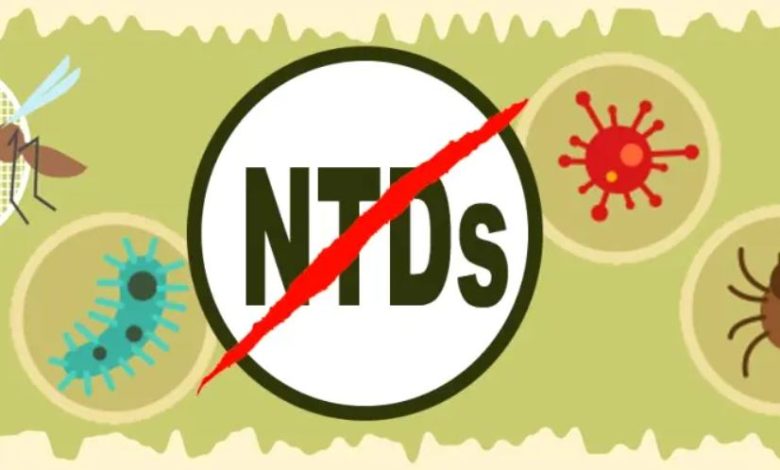
DAR ES SALAAM: AS Tanzania continues to perform well in health in collaboration and guidance of the World Health Organisation (WHO), the country has not given up the fight to eradicate the Neglected Tropical Diseases (NTDs).
Neglected Tropical Diseases, primarily endemic for five key ones targeted by preventive chemotherapy: soil-transmitted Helminths, Lymphatic Filariasis, River Blindness, and Trachoma, with high prevalence in rural, low-income areas.
Tanzania’s Ministry of Health has been committed to the NTDs control programme, integrating efforts for these diseases and others like trypanosomiasis, rabies, and buruli ulcer, showing progress in reducing their burden through mass drug administration and strategic funding.
Tanzania in collaboration with WHO to come up with a joint two-year work plan to strengthen health services in the country as WHO Resident Representative Dr Alex Gasasira noted, the joint plan must be country-led rather than externally imposed as the country has its own priorities in the health sector.
The Permanent Secretary of the Ministry of Health, Dr Seif Shekalaghe, said in Dodoma recently that Tanzania has had a long history of success in the health sector, so in new plans to improve health services in the country, it is advisable to follow the principles of leadership and performance that have built the country’s reputation in Africa.
Focusing on the recent challenge Tanzania faced after the withdrawal of USAID funding, the health sector was among those affected, leaving Tanzanian citizens worried about its impact on their lives.
“The withdrawal of funding was just a wake-up call, and we have to come up with an effective alternative, assures Dr Clarer Mwansasu, the Manager of Neglected Tropical Diseases Control Program during her recent interview with the Daily News.
She insists the withdrawal of USAID funding in 2025, howedver forced Tanzania to come up with more alternatives to tackle the effects of the challenge.
ALSO READ: Tanzania’s Universal Health Insurance enters historic implementation phase
According to Dr Mwansasu, the move was like a wake- up call to the Tanzanian government as it made it bank on powerful domestic efforts that today are seen as a useful option in dark moments.
Moreover, she said that the efforts taken by the government to deal with the challenge were just a continuation of its previous efforts, which led to an increase in the NTD budget from 1.8bn/-, equal to 0.6 per cent in 2021, to 16.9bn/-, equal to 25 per cent by 2024.

Elaborating, Dr Mwansasu said in 2025, the country NTDs drug administration soared from 25 per cent to more than 60 percent and presently, 130 of councils are running their own drug administration campaigns.
According to her, the government expects that in this year, 2026 many of these councils will reach 80 per cent domestic financing.
Additionally, she said that the government’s deliberate political and fiscal prioritization of NTDs, which included accelerating reforms such as full government ownership of NTD programs, became a turning point that worked as magic to save the country from the sudden shift.
“Key institutional decisions involved integrating them directly into our Health Sector Strategic Policy Priorities for 2025/26, integrating NTDs health commodities (Praziquantel and Albendazole) into the Universal Health Insurance Package alongside decentralising financing and delivery to all 184 district councils,” she said.
Adding Dr Mwansasu said the NTD funding landscape abrupt change had put the country in a critical moment when putting more than 17 million people at risk of NTDs, of which 10 million are children at risk of schistosomiasis and soil-transmitted helminths.
Commenting on how realistic is the goal of reaching 60 per cent domestic financing at council level in this year of 2026, she said that the goal is supported by a strong upward trend, which has been demonstrated in the past few years, where domestic financing increased from 0.61 per cent in 2020/21 to over 60 per cent by 2025.
In 2024 alone, 130 councils conducted Mass Drug Administration, MDAs entirely without donor funding, reaching 60 per cent.”In this regard, I am happy to say that we have attained the overarching goal of attaining the 60 per cent domestic financing,” she said.
Elaborating on the measures taken by the government and the country went about with the matter, she said that when districts became responsible for budgeting and delivering NTD interventions, responsibility shifted to all 184 districts, leading to localised delivery.
She revealed that the shift resulted in 130 councils successfully executing MDAs for Schistosomiasis as Soil Transmitted Helminthiasis in 2024.
“We are moving away from ‘blanket treatment’ to what we call ‘Smarter Spending’. We aren’t just treating administrative districts anymore; we are mapping the actual ecological limits of the disease. For schistosomiasis, we are treating at ward level, to target the high-risk communities. This decentralisation is a key pillar of the reform that turned a funding crisis into an opportunity for localised ownership,” she said.
Furthermore, she said that by integrating NTDs into the decentralisation framework, councils have become responsible for the budgeting and delivery of interventions, which is tracked through tools like the NTD Scorecard that identifies performance gaps and underinvestment at the local level.
Moreover, she noted that DHIS2 made NTD data easier to see and use, helping with budgeting, planning, and spotting gaps.
She further said that Tanzania’s integration of health campaigns has led to significant efficiency gains where in 2025, combining deworming with Vitamin A distribution helped reduce costs and save staff time.
ALSO READ: Geita residents benefit from free medical camp
The Dr said that by using teachers as distributors in school-based campaigns also improved coverage and community trust, adding that the integrated approach is highly effective, enhancing both reach and efficiency, and is key to sustaining progress in the fight against neglected tropical diseases (NTDs).
Furthermore, Dr Mwansasu applauded domestic donations programs in the country noting that they are the backbone of the Preventive Chemotherapy strategy that has successfully reduced the population requiring treatment by 76 per cent between 2021 and 2025.
According to her, a decline in domestic financing poses a significant threat to the sustainability of NTD programmes, especially following the withdrawal of major external donors.
“Because the government has shifted to a model of ownership and decentralised delivery, the elimination framework now relies on co-financing,” the Dr said.
Moreover, she said that Tanzania is setting an example for other African nations dealing with donor withdrawal by leveraging strong political will, decentralised health systems, and data-driven accountability through scorecards, while integrating neglected tropical diseases (NTDs) into national health plans.
According to her, the approach has transformed a potential funding crisis into an opportunity for meaningful health sector reforms.
Neglected tropical diseases (NTDs) are a diverse group of conditions caused by a variety of pathogens (including viruses, bacteria, parasites, fungi and toxins) and associated with devastating health, social and economic consequences.
NTDs are mainly prevalent among impoverished communities in tropical areas, although some have a much larger geographical distribution. It is estimated that NTDs affect more than 1 billion people, while the number of people requiring NTD interventions (both preventive and curative) is 1.495 billion.
The epidemiology of NTDs is complex and often related to environmental conditions.
Parasitic infections are widespread in the country due to many factors, including the low socio-economic status of rural populations.
As a result of infections, 44 per cent of the populations are considered undernourished, with one in three children underweight for age and almost one in two with obvious stunted growth.
However, with NTDs increasing sharply across all population groups in Tanzania, experts called on the public to get regular health checkups and adopt healthier lifestyles to prevent future pressure on the nation’s workforce.
They stressed the need for Tanzanian families to adopt a culture of regular check-ups so as to contain the rising number of people suffering from the diseases.